
Sunday, April 21, 2019
SPAIN Gorka Benítez Trio-Salalagua (Fresh Sound New Talent 2018) #GorkaBenítez
This isn’t the first time I start writing about Gorka Benítez. It’s not that I find writing about this much beloved and individual musician hard, mind you. But every time I think I have a clear description of Gorka in mind, words fail me: they fall short from what I actually mean to say. Where others explore new or old avenues to develop their ideas, Gorka forges his own path to the side, unconcerned by the business side of the music industry. He does so without regard for established aesthetics or musical tendencies because his particular style derives not only from his talent, but also from his sheer personality. Fresh Sound New Talent

Saturday, April 20, 2019
USA/JAPAN: #jazz Fumi Tomita-The Elephant Vanishes: Jazz Interpretations Of The Short Stories Of Haruki Murakami (2019) @Fumitomita # bass #Fumitomita
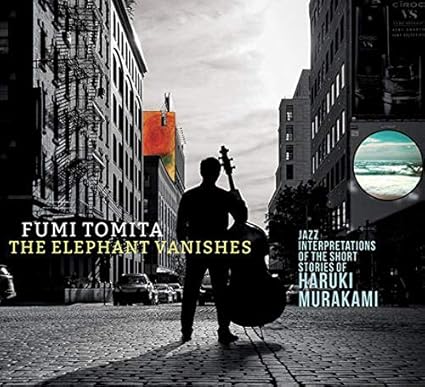
With haunting, memorable melodies, the combination of writer Haruki Murakami's influence and bassist Fumi Tomita's compositions is a bold statement of Asian-American identity. 'The Elephant Vanishes' interprets seven short stories by the Japanese author that draw on themes of despair, loneliness, disconnection, and self-discovery. Equally prominent are the Western pop culture references and magical elements that decorate each story. Along with saxophonist Jason Rigby, guitarist Mike Baggetta, pianist Art Hirahara and drummer Mark Micklethwaite, Tomita reimagines Murakami's literary themes, transforming them into rich musical landscapes. Active in New York City for fifteen years, Tomita is currently on the faculty at the University of Massachusetts, Amherst.
Friday, April 19, 2019
SWITZERLAND: @AkkuQuintet AKKU quintet Swiss Minimalistic Jazz Ensemble Akku Quintet To Release Fourth Album “Depart” On Trey Gunn's 7dMedia Label

For Immediate Release
Swiss Minimalistic Jazz Ensemble Akku Quintet To Release Fourth Album “Depart” On Trey Gunn's 7dMedia Label
Featuring Sonar drummer Manuel Pasquinelli
The Akku Quintet was founded by drummer and composer Manuel Pasquinelli. Says renown writer Sid Smith, “Best-known for his work in Swiss post-rock minimalist outfit, SONAR, Pasquinelli's writing contains an almost cinematic dimension that encompasses bittersweet moods and moments of unfolding drama.” The band is based in Switzerland, from where they dispense a minimalistic jazz groove to great effect.
Since their first concerts in 2011 the band gained more and more international attention (North-America tour in autumn 2018). Their debut album “Stages of Sleep” was released in May 2013 (Morpheus Records). The quintet then set the different phases of sleep to music. Following their acclaimed 2015 album “Molecules” Akku Quintet released their third record “Aeon” in 2017. In October 2018 the band toured Canada and USA.
Their fourth album “Depart” is the first to be released on Trey Gunn's (King Crimson, Security Project) 7d Media label on May 17th.
Says Manuel, “We have chosen 'Depart' as the album title because it describes very good the general feeling/spirit of the album. I'd say compared to our previous albums, 'Depart' is more driving and expressive. I think one can hear a forward-moving undertone on all the tracks. The title track 'Depart' comes along in a courageous and at the same time doubting and mysterious mood, performed with lots of playfulness. 'Depart' was the best word to describe the mood of this track and the album in general.”
“The group connect and lock together yet remain constantly in motion, maintaining a balletic poise and grace that skilfully builds and adds line upon line of long, sonorous notes. Though each one on its own might be gossamer-thin, when combined, they create something strong and enduring, something substantial and memorable.” - Sid Smith
Akku Quintet's new album still has a minimalistic touch, but you'll hear more of the soloistic qualities of the group members. It's a colourful, powerful album of a well attuned band. Recorded live in the studio April 16-19, 2018, the compositions were written by Manuel Pasquinelli.
Says Manuel, “We recorded the album within 4 days. All the songs were performed live in the studio, playing all together as a band. We rehearsed/developed the music in a short but intense rehearsal phase. At the weekend before the studio we played one concert with the new material. In the studio we were well prepared but the songs were still new for us. The music was finally shaped while playing as a group in the studio. I've written the music over a period of several months. Some sketches I already had long before, but there are also parts or songs that I've written just one or two weeks before the studio session.”
Line Up:
Michael Gilsenan: Sax
Maja Nydegger: Keys
Markus Ischer: Guit
Andi Schnellmann: Bass
Manuel Pasquinelli: Drums
Manuel Pasquinelli is also known as drummer of the band Sonar which is currently collaborating with David Torn and Bill Laswell. Andi Schnellmann is regularly touring with Schnellertollermeier (Cuneiform Records). In support of the new release the Akku Quintet will have some album-release gigs in Europe in May and will be touring in Europe and Russia in autumn. The band also hopes to play North America again soon.
In closing Manuel has this to impart, “My goal is to impart a specific mood to the listener. Not a concrete story, but a mood and a progression with changing conditions/colors to dive in as a listener. And I hope one can listen a tune on the album several times and discover always new things in the song and look at it/listen to it with a different focus/perspective.”
To purchase: https://akkuquintet7d.
For more information:
Press inquiries: Glass Onyon PR, PH: 828-350-8158, glassonyonpr@gmail.com
Thursday, April 18, 2019
NETHERLANDS: #jazz Peter Beets Trio - Our Love Is Here To Stay - Gershwin Reimagined (Challenge Records 2019) @PeterBeets

Peter Beets: With this, my latest album celebrating the timeless melodies of one of Americas and the worlds greatest composers, I have the chance to showcase it all - classical, blues, jazz, Latin, and folk music! This is the legacy of George Gershwin who continues to inspire musicians of every persuasion and instrument - and of course, me. As one of the most sought-after jazz artists of our time, Peter Beets has attracted a devoted international audience, performing regularly at major jazz festivals and venues throughout Europe, the United States and Asia. He has shared the stage with jazz greats such as Chick Corea, Wynton Marsalis, Toots Thielemans, Elvin Jones, George Coleman, Johnny Griffin, Benny Golson and Kurt Rosenwinkel. One of his earliest recordings, ""First Date"" (1996), featured the great Jeff Hamilton on drums. In 2001 the Criss Cross label invited Peter for a series of albums with his ""New York Trio"", inviting artists like Willie Jones III, Larry Grenadier and Greg Hutchinson, earning him international acclaim.
Wednesday, April 17, 2019
PORTUGAL/GERMANY Carlos Bica- I am The Escaped One( Clean Feed 2019) #CarlosBica #jazz #doublebass #cleanfeed
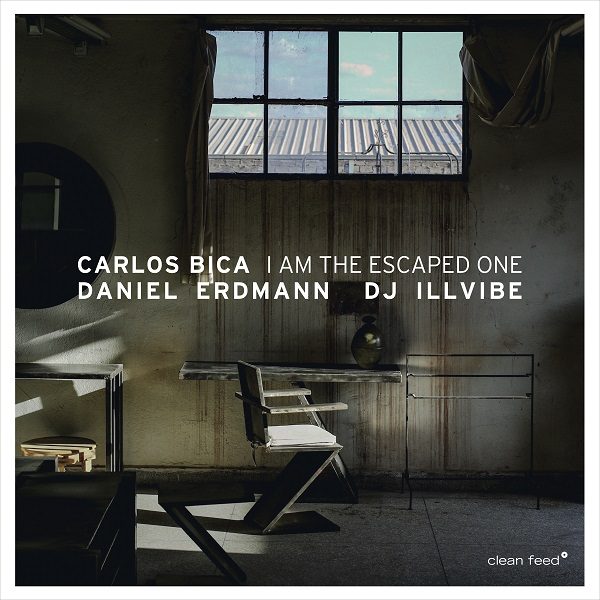
Double bassist and composer Carlos Bica has carved out a jazz niche for himself with his inventive style of lyrical-indie-jazz. Among the several musical projects he leads, his trio AZUL has become his showcase as a bass player and composer. For more than twenty years Bica’s trio AZUL with Frank Möbus and Jim Black has fascinated its listeners. Living in Berlin, Portuguese Bica again and again creates a music that seems familiar yet excitingly new and personal at the same time.
With his new album “I Am the Escaped One” in association with two of the most idiosyncratic figures of the German scene, saxophonist Daniel Erdmann and turntablist DJ Illvibe, the music goes even beyond anything he did before.
Daniel Erdmann, a major voice in the European jazz scene, has developed an unique tenor sax sound in ensembles like Das Kapital or Velvet Revolution, built on top of the jazz tradition but committed to find new paths. DJ Illvibe is and remains a sound innovator, a gold digger for the craziest sound-shreds, Vincent von Schlippenbach is DJ Illvibe and the world is a record.
If you’re searching for something different and fulfilling you found it, “I Am the Escaped One” is the perfect soundtrack for the movie that still has to be made.
Clean Feed
Tuesday, April 16, 2019
USA: Joe Chambers Quartet “Landscapes” An Die Musik Baltimore, Md. Friday, April 26th Sets 8:00 & 9:30 pm #jazz #vibes #JoeChambers
| Joe Chambers’ Quartet “Landscapes” with Joe Chambers, vibes Allyn Johnson, piano Herman Burney, bass Dennis Chambers, drums and percussion An Die Musik 409 N. Charles St. Baltimore, Md. 21201 301-366-1118 Friday, April 26, 2019 Sets 8:00 pm and 9:30 pm Tickets & Info  |
 |
| Joe Chambers Biography Joe Chambers has worked with some of the most influential jazz figures of the last several decades and is a recognized performer and composer whose works have been performed at Carnegie Hall and Lincoln Center. As a sideman and leader, Chambers has recorded more than 500 albums and CDs. He has performed and recorded with Miles Davis, Freddie Hubbard, Wayne Shorter, McCoy Tyner, Chick Corea, Sonny Rollins, Herbie Hancock, Dizzy Gillespie, Andrew Hill and many more. Chamber’s credits include Hubbard’s “Breaking Point,” Joe Henderson’s “Mode for Joe,” Hutcherson’s “Components,” Shorter’s “Schizophrenia.” and “Etcetera,” Hill’s “Compulsion,” and Tyner’s “Tender Moments,” as well as Archie Shepp’s “New Thing at Newport,” Charles Mingus’ “Like a Bird,” Chick Corea’s “Tones for Joan’s Bones,” and many others. Chambers’ compositions have been covered by Hutcherson, Hubbard and M’Boom; he has also contributed to soundtracks for several Spike Lee films, including “Mo’ Better Blues.” Chambers is the first Thomas S. Kenan Distinguished Professor of Jazz in Department of Music at the University of North Carolina Wilmington. His most recent recording is “Joe Chambers moving pictures orchestra live” of Dizzy’s Club Coca-Cola in New York City, Savant 2120, released May 2012 and was nominated for a Grammy in 2013. Website: https://www.josephachambers.  Allyn Johnson Allyn JohnsonNative Washingtonian ALLYN JOHNSON is a multi-talented musician, composer, arranger and producer whose trademark sound gives brilliance and fortitude to the art of jazz improvisation. Allyn, a prodigy who began playing piano at the tender age of five, got his start playing piano for the youth choir in his uncle's church. There he honed his inner musical gift. While a student at the University of the District of Columbia, Allyn was mentored by the late great jazz legend Calvin Jones, a venerable figure in the international jazz community. in 2005 Allyn started an ensemble combining Gospel, Jazz and Classical music called Divine Order. He also has a group called Sonic Sanctuary which may be heard as his trio or small ensemble which ranges from acoustic straight ahead jazz to jazz fusion and funk. No matter what configuration Allyn may be heard in, you can best believe it will be just "good music for the soul."  Herman Burney Herman BurneyHerman Burney is a native of Washington, DC, but was raised in the arts-nurturing state of North Carolina where he grew up listening to Mahalia Jackson, Aretha Franklin, and James Cleveland. During his early years Herman played clarinet, drums and tuba and later took up electric bass for a “hard-core funk group” in high school. After meeting jazz titan George Duvivier in 1987, Herman finally settled on his beloved double bass. Herman has traveled all over the world to establish an impressive list of performance credentials as bassist for Nneena Freelon, Marcus Roberts, Freddy Cole, Natalie Cole, Wynton Marsalis, Frank Wess and many others of equal renown. Herman’s first CD was was titled “First Fruits. ” His second is “Offering,” a collection of orginal tunes. When Herman is “at home” he is teaching at George Washington University and the Sitar Arts Center in D.C. 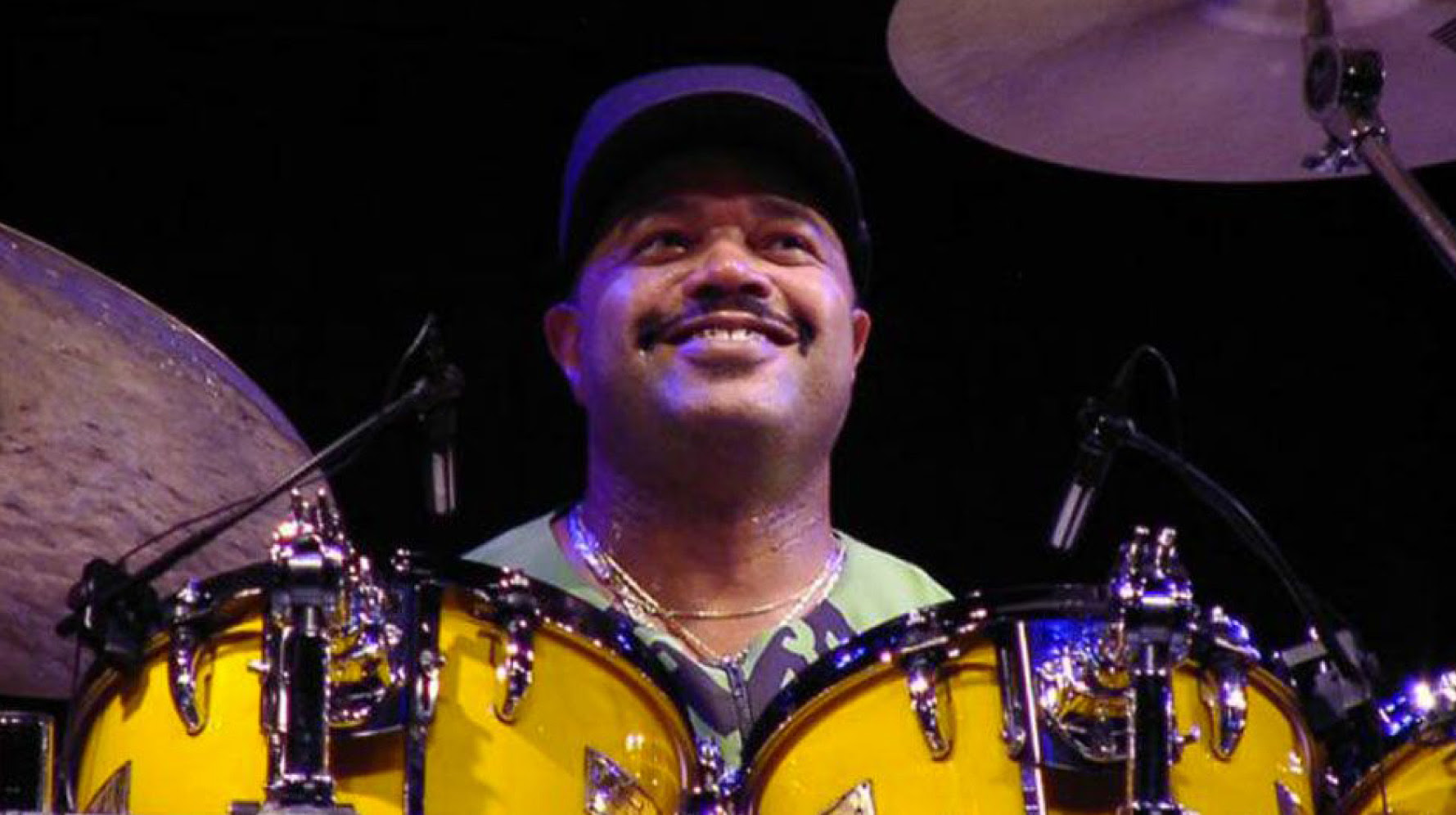 Dennis Chambers Dennis ChambersDennis Chambers (born May 9, 1959) is an American drummer who has recorded and performed with John Scofield, George Duke, Brecker Brothers, Santana, Parliament/Funkadelic, John McLaughlin, Niacin, Mike Stern, CAB, Greg Howe, and many others. Despite a lack of formal training, Chambers has become well known among drummers for his technique and speed. Chambers is particularly regarded for his ability to play "in the pocket" but can also stretch very far out of the pocket which is also a hallmark of his technique. Chambers exhibits a powerful style that is technically proficient, yet highly musical and groove-oriented. He can play in a wide variety of musical genres, but is perhaps most notable for his jazz-fusion, funk, and Latin music playing. He is mostly known for his fast hands and triplets on the bass drum. He has helped many young drummers, the most prominent being Tony Royster, Jr.  Landscapes (review) Landscapes (review)SAVANT 2140 The reviewing equivalent of this publication’s Blindfold Test is to listen to an album knowing only the title and name of its leader. Taking that approach with veteran drummer Joe Chambers’ Landscapes, one is introduced to a vibraphone-driven four-piece unit à la the Modern Jazz Quartet. It’s a lush ambiance, full of complexity and color. A slinky version of Monk’s “Epistrophy” opens this dynamic album, and is followed by Horace Silver’s “The Outlaw,” which showcases a thoughtfully developed piano solo. Thee sustained vibraphone on “Never Let Me Go” emphasizes the lyrical themes of holding on and the potential pain of loss.Chambers’ strength as a composer is reinforced on “Samba De Maracatu,” which boasts standout solos by Chambers himself. Paul Arslanian’s lovely “Pas De Trois,” Sonny Rollins’ “Airegin,” another Silver number (“Ecaroh”) and Karl Ratzer’s “Underground System”—rechristened “Underground (Railroad) System”—follow. Chambers generously allows the pianist to conclude the album with a solo reading of the title track. Upon delving into the accompanying material, the big reveal is that this is actually a trio date with Chambers overdubbing the tuned percussion as well as all the other non-rhythm section instruments. And the nearly 10-minute solo piano number? That’s Chambers, too. Landscapes sounds like the fluid live studio recording of four or more musicians, so it’s impressive on multiple levels. —Yoshi Kat Landscapes: Epistrophy; The Outlaw; Never Let Me Go; Havana; Samba De Maracatu; Pas De Trois; Airegin; Ecaroh; Underground (Railroad) System; Landscapes. (59:58) Personnel: Joe Chambers, drums, congas, bongos, vibraphone, marimba, synthasizer, piano (10); Rick Germanson, piano (1-9); Ira Coleman, bass (1-9), Ordering info: JazzDepot.com |
Monday, April 15, 2019
USA: Machito & the Impact of the Afro-Cubans #jazz #cuba #hostos

Tickets & Info |
|
Hostos Center for the Arts and Culture announces
complete schedule, artistic personnel and activities for Machito & the Impact of the Afro-Cubans at 80 May 2 – 4, 2019 The festival’s ten events, many free, also delve into the careers and impact of Machito's family members and musical partners in the Afro-Cubans – Mario Bauzá (1911- 1993) and vocalist Graciela (1915-2010), known as the “First Lady of Latin Jazz.” Bauzá, was a talented multi-instrumentalist who served as musical director of his brother-in-law’s orchestra and encouraged Machito to embrace American jazz with Cuban rhythms. After Machito was drafted in the Army, Bauzá brought Machito’s sister Graciela (Peréz-Gutiérrez) from Cuba to join the band as lead singer. After Machito’s return from service, the three shared the stage for 32 years, topping the charts and reigning supreme at New York’s Palladium Ballroom in its heyday. Machito was the eldest of “The Three Kings” – the moniker given to the celebrated band leaders that performed at the Palladium – the others being Tito Puente, who was a timbalist in Machito’s Afro-Cubans in 1941, and the singer Tito Rodríguez who made his last public appearance with Machito in 1973. Under the artistic direction of Machito's son, Mario Grillo, as well as Jazz at Lincoln Center Orchestra bassist and composer Carlos Henríquez and Latin music historian Joe Conzo, Sr., the festival is designed for both Machito enthusiasts and those less familiar with his music. Henríquez leads “Machito and Beyond” on Thursday, May 2, at 7:30 PM, in a concert that includes acclaimed vocalist Cita Rodríguez, a host of New York’s top young jazz musicians, plus some legendary percussion veterans, for a youthful take on some Machito classics. Bobby Sanabria & Ascensión will take to the stage in a free family concert on Saturday, May 4, at 11 AM, with an informative performance demonstrating how Machito & the Afro-Cubans brought Cuban forms to Latin jazz. The final concert on Saturday, May 4 at 7:30 PM features The Machito Orchestra in its 80th Anniversary concert under the direction of Mario Grillo, who carries on his father's legacy, and featuring guest vocalist and two-time Grammy winner Herman Olivera. In addition to these concerts, the three-day celebration includes listening sessions, a panel discussion, a film presentation, a museum exhibit with tour, a Latin rhythm workshop, and a closing Mambo Dance Party in the Hostos Café. Tickets, including 3-day passes for $45, and a schedule of events are available atwww.hostoscenter.org or by calling (718) 518-4455. EVENTS Listening Room Prior to the Thursday evening and Saturday evening concerts, in the Longwood Art Gallery @ Hostos beginning at 6 PM, Joe Conzo, Sr., presents “The Listening Room,” one hour sessions that will include information and musical anecdotes about the concerts as well as never before heard recordings of Machito from different periods. Among the many rare recordings, include performances of Machito with Charlie Parker and Ella Fitzgerald. Conzo, who has lectured on Machito and Latin music for Hostos Community College’s Continuing Education division for the last six years, has an unmatched collection of Machito live recordings. Admission is free, and includes a complimentary glass of wine. Opening Concert: Machito and Beyond For the opening concert, “Machito and Beyond” on Thursday, May 2, at 7:30 PM in the Main Theater, Jazz at Lincoln Center Orchestra bassist / composer / arranger Carlos Henríquez directs an ensemble of top young jazz artists augmented by a veteran percussion section. They will perform a curated selection of Machito’s music including songs of Graciela sung by guest vocalist Cita Rodríguez. The percussionists -- former member of The Machito Orchestra and longtime musical director of the Tito Puente Orchestra José Madera, whose father was an original member of the Afro-Cubans, Machito/Puente veteran Louis Bauzo and Puente alumnus John “Dandy” Rodríguezwill be featured in “Bongo Fiesta” and other tunes. The concert will also include a world premiere of long-time Machito Orchestra saxophonist / composer / arranger Ray Santos. Orchestra seating is $25 and Mezzanine seating is $20; $5 for students and under 18. (See below for details) Exhibit Tour To continue the celebration on Friday, May 3 at 6:30 PM, Joe Conzo, Sr., will lead a guided tour of the exhibit Machito and Mario: The Roots of Afro-Cuban Jazz in the C-Atrium. Conzo, the author of Mambo Diablo: My Journey with Tito Puente is currently writing a book on the “Big Three” bandleaders—Machito, Tito Puente, and Tito Rodríguez. The exhibit was developed by and is on loan from the National Jazz Museum in Harlem. Film Screening A presentation of the biographical documentary Machito: A Latin Jazz Legacy (1987) by Carlos Ortiz will be held on Friday, May 3, at 7:30 PM in the Repertory Theater. One-of-a-kind street performances from Cuba to New York, dancing scenes at the Savoy, the Palladium and the Apollo Theater, and commentary by Dizzy Gillespie, Ray Barretto, Dexter Gordon, and Machito himself all come together to trace his music from its roots in Cuba to its impact in New York. Jon Pareles of The New York Times calls the film “hugely informative, with astonishing archival footage.” Following the screening, a post-film discussion will be moderated by Columbia University Professor and trombonist Chris Washburne with Machito's son, Mario Grillo, and author and historian Joe Conzo, Sr.Admission is free, but tickets are required. (See below for details.) Family Concert: “What Made Machito & the Afro-Cubans Musical Groundbreakers?” Eight-time Grammy nominee Bobby Sanabria brings his nonet Ascensión to the Repertory Theater on Saturday, May 4, at 11 AM for a free family concert. A Bronx native who is on the faculty of the Manhattan School of Music as well as the Jazz & Contemporary Music Program at the New School, Sanabria and his ensemble will delight all ages as they perform the music of the Afro-Cubans. This lively and informative performance examines how Machito fused the Cuban forms of son, bolero, and mambo with jazz. While admission to the concert is free, tickets are required. “En Clave con Machito” Latin Rhythm Section Workshop Following the family concert at 1:30 PM, Mario Grillo and The Machito Orchestramembers lead a Rhythm Section Workshop in the Repertory Theater. They will discuss, demonstrate, and answer questions on what makes a Latin rhythm section work, demonstrating how congas, bongos, and timbales complement the bass and piano, which is now the standard in Latin music. In addition to Mario Grillo on timbales and percussion, the workshop includes Eddie Montalvo (congas), Luis Mangual, Jr. (bongos), Gilberto 'Pulpo' Colón (piano), and Jerry Madera, bass. The workshop is hosted by the percussionist / educator Annette A. Aguilar. All ages are welcome. Admission is free, but registration is required (See below for details). Panel Discussion A panel discussion entitled “Machito, Bauzá, & Graciela: Creating a Genre that Endures” follows in the Repertory Theater at 3:30 PM. Loren Schoenberg, Founder and Senior Scholar of the National Jazz Museum in Harlem, moderates this discussion of the trio's lasting impact on Latin jazz and Latin music. Panelists include: percussionist and Musical Director of The Machito Orchestra, Mario Grillo; archivist / biographer, Joe Conzo, Sr., saxophonist / composer / arranger Ray Santos; percussionist / bandleaderBobby Sanabria; author / historian René López and vocalist / educator Cita Rodríguez. Admission is free, but tickets are required. (See below for details). Closing Concert The Machito Orchestra performs a historic “80th Anniversary Concert” at 7:30 PM in the Main Theater, with Musical Director and Percussionist Mario Grillo leading the tribute to his father’s work. Guest vocalist, Herman Olivera, the noted sonero who, among his many achievements, has been lead vocalist for Eddie Palmieri, will take on the singer's role. In addition to Machito hits such as “Cuban Fantasy” and “Mambo Inn,” the concert will include some rare gems. Orchestra seating is $35 and Mezzanine seating is $25; $5 for students and under 18. (see below for details) Dance Party The festival ends with a Mambo Dance Party in the Hostos Café immediately following the performance at approximately 9:30 PM. Warrior DJ Roy will spin Machito’s hits for dancing. Tickets are $10 and include two beverage tickets for wine or a soft drink. The Dance is available for concert ticket holders only. Tickets can be purchased by calling (718) 518-4455 or online at www.hostoscenter.org. All reservations and registrations for free events can be made by calling (718) 518-4455. Weekend passes for both evening concerts and the dance party can be purchased for $45 and include the best available seats. Box Office window hours are Mon. – Fri., 1 PM to 4 PM, and 2 hours prior to events. Hostos Community College can be reached by the IRT 2, 4, 5, and busses Bx1, Bx2, Bx19 to East 149th Street and the Grand Concourse. “Machito and the Impact of the Afro-Cubans at 80” is sponsored by the Hostos Community College Foundation with funds from: the National Endowment for the Arts, the New York City Department of Cultural Affairs in partnership with the City Council, the New York State Council on the Arts with the support of Governor Andrew M. Cuomo and the New York State Legislature, The Howard Gilman Foundation, the New York State Office of Parks, Recreation and Historic Preservation, the Office of New York State Assemblyman José Rivera, and the Office of New York City Councilmember Rafael Salamanca, Jr. A Listing of Events and Biographies of the Artistic Directors and Vocalists Follow: Thursday, May 2 Music/Talk: Listening Room with Joe Conzo, Sr. Longwood Art Gallery @ Hostos, 6:00 PM Free Admission Opening Concert: “Machito & Beyond” with Carlos Henríquez Ensemble & guest vocalist Cita Rodríguez (with percussionists José Madera, Louis Bauzo, and John “Dandy” Rodríguez) Main Theater, 7:30 PM Orch: $25 Mezz: $20 (Students and Under 18: $5) Friday, May 3 Exhibit Tour: “Machito and Mario: The Roots of Afro-Cuban Jazz” with Joe Conzo, Sr. C –Atrium, 6:30 PM Free Admission Film: “Machito: A Latin Jazz Legacy” Panel discussion follows moderated by Chris Washburne Repertory Theater, 7:30 PM Free Admission (Tickets Required: 718-518-4455) Saturday, May 4 Family Concert: “What Made Machito & the Afro-Cubans Musical Groundbreakers?” Bobby Sanabria & Ascensión Main Theater, 11 AM Free Admission (Tickets Required: 718-518-4455) (Saturday May 4, Continued) Workshop: “Machito en Clave” Latin Rhythm Section Repertory Theater, 1:30 PM Free Admission (Registration Required: 718-518-4455) Guest Artists: Mario Grillo, Eddie Montalvo, Luis Mangual, Jr., Gilberto 'Pulpo' Colón, Jerry Madera; hosted byAnnette A. Aguilar Panel: “Machito, Bauzá, & Graciela: Creating a Genre that Endures” Repertory Theater, 3:30 PM Free Admission (Tickets Required: 718-518-4455) Participants: Loren Schoenberg, moderator, Mario Grillo, Joe Conzo, Sr., Ray Santos, Bobby Sanabria, René López, Cita Rodríguez Music/Talk: Listening Room with Joe Conzo, Sr. Longwood Art Gallery @ Hostos, 6:00 PM Free Admission Closing Concert: The Machito Orchestra 80th Anniversary Concert led by Mario Grillo Main Theater, 7:30 PM Orch: $35 Mezz: $25 (Students and Under 18 - $5) Dance Party: Mambo Dance Party Hostos Café (Third floor), 9:30 PM (approx.) $10 (includes two beverage tickets for wine/soft drink) Limited Capacity. Concert ticket holders only. Francisco “Machito” Grillo (1908-1984) played a huge role in the history of Latin jazz, for his bands of the 1940s were probably the first to achieve a fusion of powerful Afro-Cuban rhythms and jazz improvisation. At its roaring best, the band had a hard-charging sound, loaded with jostling, hyperactive bongos and congas and razor-edged riffing brass. Machito was the front man, singing, conducting, shaking maracas, while his brother-in-law Mario Bauza was the innovator behind the scenes, getting Machito to hire jazz-oriented arrangers. The son of a cigar manufacturer, Machito became a professional musician in Cuba in his teens before he immigrated to America in 1937 as a vocalist with La Estrella Habanera. He worked with several Latin artists and orchestras in the late '30s, recording with the then-dominant Latin bandleader Xavier Cugat. After an earlier aborted attempt to launch a band with Bauza, Machito founded the Afro-Cubans in 1940, taking onBauza the following year as music director where he remained for 35 years. After making some early 78s for Decca, the Afro-Cubans really began to catch on after the end of World War II, appearing with -- and no doubt influencing -- Stan Kenton's orchestra (Machitoplayed maracas on Kenton's recordings of "The Peanut Vendor" and "Cuban Carnival") and recording some exciting sides for Mercury and Clef. Upon Bauza's urging, Machito'sband featured a galaxy of American jazz soloists on its recordings from 1948 to 1960, including Charlie Parker (heard memorably on "No Noise"), Dizzy Gillespie, Flip Phillips, Howard McGhee, Buddy Rich, Harry "Sweets" Edison, Cannonball Adderley, Herbie Mann, Curtis Fuller and Johnny Griffin. Playing regularly at New York's Palladium,Machito's band reached its peak of popularity during the mambo craze of the 1950s, survived the upheavals of the '60s and despite the loss of Bauza in 1976, continued to work frequently in the '60s, '70s, and early '80s when the term "salsa" came into use. The band recorded for Pablo (in tandem with Gillespie) and Timeless in its later years, and was playing Ronnie Scott's club in London in 1984 when Machito suffered a fatal stroke. A documentary film by Carlo Ortiz, Machito: A Latin Jazz Legacy, was released in 1987. – Richard Ginnell All Music Graciela Pérez Gutiérrez (1915-2010) was born in Havana, Cuba and raised in the Afro-Cuban Jesús María neighborhood. A pioneer in music, as a black Cuban woman, in a so-called man's world, she opened doors for all those who followed her. She performed around the world, recording and sharing the stage with her adoptive older brother, Frank "Machito" Grillo, who encouraged her to sing. They played alongside Mario Bauzá(originator of the genre of Afro-Cuban Jazz) in the world-renowned orchestra Machito and the Afro-Cubans. Graciela was primarily known for her tremendous voice, risque and sassy stage presence and sexy double entendre lyrics. She could sing a jazzy guarachaas easily as handling the most romantic boleros. Though her last names were Pérez Gutiérrez, she was only known by her first name, "Graciela", long before doing so became widely fashionable among musicians. She was summoned to New York City in 1943 by Mario Bauzá, when Machito was drafted into the army. She joined the orchestra as lead singer until Machito returned in 1944 and from then on the three shared the stage together until their untimely split in 1975. For thirty-two years they were on top of the charts and were the orchestra not only to beat, but to emulate. Not only did they travel the United States and the rest of the world, but they were leaders and reigned supreme during the heyday of the Palladium Ballroom (where blacks, Jews, Italians and Hispanics, and celebrities would converge to dance), from 1946 until it’s closing in 1966. Besides the Palladium, they would perform at the Royal Roost, Birdland, the Park Palace, the Corso and the Apollo Theater on a yearly week-long gig—and many other clubs and theaters in New York. Graciela and the orchestra also performed on a yearly basis in Hollywood—specifically at the Crescendo nightclub.. They were also the summer headliners in theConcord Resort Hotel, in the Catskills Mountains, for more than twenty years. They recorded albums in which her best-known songs include "Esta es Graciela", "Íntimo y Sentimental" and "Esa Soy Yo, Yo Soy Así." – Wikipedia About Mario Grillo Mario Grillo is old enough to have caught the tail end of the Mambo craze, and to have played with his father, yet young enough to have absorbed the groundbreaking trends that influenced Latin jazz. Grillo played timbales, congas and bongos when he made a debut with his father’s band, The Machito Orchestra, at the age of five. In 1975, he joined the band for its Grammy-nominated recording Afro-Cuban Jazz Moods with Dizzy Gillespie and featured arrangements by Chico O'Farrill. Grillo, often known as “Machito, Jr.,” toured Europe with Machito and took over the duties of musical director in the band in 1977, the year that they earned another Grammy nomination for Fireworks—when Lalo Rodríguez changed the tone as co-lead singer. Committed to keeping his father's legacy alive, the renowned percussionist has since returned to venues around the world with The Machito Orchestra. A native New Yorker, he has led the orchestra for more than 40 years at home and abroad. In 2015, he donated Machito's handwritten scores and arrangements to the Library of Congress. Most recently, Grillo has been performing and recording with the Dizzy Gillespie Afro Cuban Experience under the direction of bassist John Lee. About Carlos Henríquez Carlos Henríquez was born in 1979 in the Bronx. He studied music at a young age, played guitar through junior high school and took up the bass while enrolled in The Juilliard School’s Music Advancement Program. He entered LaGuardia High School of Music & Arts and Performing Arts and was a member of the LaGuardia Concert Jazz Ensemble, which went on to win first place in Jazz at Lincoln Center’s Essentially Ellington High School Jazz Band Competition and Festival in 1996. In 1998, swiftly after high school, Henríquez joined the Wynton Marsalis Septet and the Jazz at Lincoln Center Orchestra, touring the world and being featured on more than 25 albums. Henríquez has performed with Chucho Valdés, Tito Puente, the Marsalis Family, Willie Nelson, Bob Dylan, Stevie Wonder, Marc Anthony, and many others. He has been a member of the music faculty at Northwestern University School of Music since 2008, and was music director of the Jazz at Lincoln Center Orchestra’s cultural exchange with the Cuban Institute of Music with Chucho Valdés in 2010. He has led many concerts at Jazz at Lincoln Center including programs on Tito Puente, Machito, Dizzy Gillespie and, most recently, for a program of his own compositions under the title “The South Bronx Story.” About Joe Conzo Sr. Historian Joe Conzo, Sr., who is currently writing a book on the “Big Three” bandleaders Machito, Tito Puente, and Tito Rodríguez, owns an unrivaled collection of Machito live recordings. He is the producer of many recordings by Latin artists on prestigious labels such as Sony Music and Pablo. Conzo lectures for Jazz @ Lincoln Center, the Smithsonian and other organizations, and, since 2013, has taught a continuing education course on Latin music and Latin Jazz at Hostos with a focus on Puente, Rodríguez and Machito. A long-time Puente publicist and confidant, he penned the acclaimed book “Mambo Diablo: My Journey with Tito Puente” and produced more than 20 benefit concerts for the Tito Puente Scholarship Fund. He also currently serves as the Director of the Tito Puente Legacy Project – an archive of Puente memorabilia based at the school. About Cita Rodríguez Cita Rodríguez, the daughter of the famed salsa singer Pete “El Conde” Rodríguez, was born in the Bronx and attended Boys and Girls Harbor School in Spanish Harlem, where she studied flute and sang in the chorus. She moved with her family to Puerto Rico in 1979, and soon after she appeared frequently with her father’s band. While a student at the Puerto Rico Conservatory of Music, Rodríguez became part of the salsa group Los Hijos de Salsa, which involved recording and touring. In 1991, after the family returned to New York, Rodríguez and her brother, Pete became part of the group Generaciónes with her father. Since her father’s passing in 2000, she has performed and recorded with her own group as well as being a featured vocalist (often performing Graciela tunes) with the Mambo Legends and other groups. About Herman Olivera Born to Puerto Rican parents in Newark, New Jersey, Herman Olivera began his career in New York City where he earned his reputation as a “sonero,” that is, an expert in the demanding art of lyric extemporization. He began performing in his early teens and achieved international recognition in the early 1980s as the lead singer of Conjunto Libre. He then went on to form recording and performance collaborations with Johnny Pacheco, Ray Barretto, The Machito Orchestra, and Israel ‘Cachao’ Lopez, among many others. In the late 1990s, Olivera assumed the prestigious role of lead vocalist for the Eddie Palmieri Orchestra. To date Herman has recorded on over 45 albums, received four Grammy nominations and is the recipient of two Grammy awards. In 2014, he recorded his debut album titled La Voz del Caribe. About the Hostos Center for the Arts & Culture The Hostos Center for the Arts & Culture consists of a museum-grade art gallery, a 367-seat Repertory Theater, and a 900-seat Main Theater, presenting artists of national and international renown. It is easily accessible from Manhattan, Queens and New Jersey and is a mere 15 minutes by subway from midtown Manhattan. www.hostoscenter.org About Hostos Community College Hostos Community College is an educational agent for change, transforming and improving the quality of life in the South Bronx and neighboring communities since 1968. Hostos serves as a gateway to intellectual growth and socioeconomic mobility, and a point of departure for lifelong learning, success in professional careers, and transfer to advanced higher education programs. The College’s unique “student success coach” program, which partners students with individualized guidance, is emblematic of the premier emphasis on student support and services. Hostos Community College is part of CUNY, the nation’s leading urban public university serving more than 480,000 students at 24 colleges. https://www.hostos.cuny.edu/ Click here for PRESS PHOTOS Hostos Community College 450 Grand Concourse Bronx, New York 10451 Box Office (718) 518-4455 www.hostoscenter.org Press contact: Jim Eigo Jazz Promo Services 272 State Route 94 South #1 Warwick, NY 10990-3363 Ph: 845-986-1677 Cell / text: 917-755-8960 Skype: jazzpromo E Mail: jim@jazzpromoservices. www.jazzpromoservices.com "Specializing in Media Campaigns for the music community, artists, labels, venues and events.” John MacElwee - 718-518-6539, jmacelwee@hostos.cuny.edu |
Subscribe to:
Posts (Atom)