Showing posts with label Mali. Show all posts

Wednesday, July 24, 2024

WorldMusicMix: Abaji(France) Nouvel EP Carnet de Voyages Part 1


Abaji
Nouvel EP Carnet de Voyages Part 1
Sortie digitale le 04/10/2024 chez Absilone
En concert au Pan Piper le dimanche 13/10/2024 à 17h


Musicien, chanteur, compositeur et grand voyageur, Abaji est de retour avec Carnet de Voyages, un EP cinq titres nourri de ses rencontres musicales de par le monde.

Après l’album Blue Shamansorti en 2021, le virtuose et multi-instrumentiste poursuit ses explorations musicales. “J’ai eu la chance et le bonheur de faire le tour du monde grâce à la musique et surtout de rencontrer des musiciens ET des instruments de musique ! Tout au long de ces voyages, je note dans ma mémoire des paysages, des sourires, des larmes et des sons, puis, en studio d’enregistrement, avec tous mes instruments rassemblés, je transforme ces souvenirs en mélodies, en rythmes et en chansons” a-t-il déclaré.

Sur Carnet de Voyages, on distingue un hulusi de Chine, une flûte bansuri d’Inde, une lyra kemence de la Mer Noire, un çura de Turquie, un charango de Bolivie, un bouzouki de Grèce, un oud-guitar de son imagination, des percussions d’un peu partout et la voix enveloppante d’Abaji.

Premier extrait du Carnet de Voyages, Abaji nous emmène au Mali pour Tango In Bamako, un titre qui relie le blues et la musique malienne. 


Auteur/compositeur/multi-instrumentiste/chanteur d’origine arménienne (né au Liban) mais vivant depuis longtemps en France, l’artiste Abaji est en fait un véritable globe-trotter, musicien virtuose, nomade mais aussi polyglotte sachant nous faire voyager à travers sa musique de l’Orient à l’Asie en passant par l’Afrique, l’Amérique et l’Europe.

Ethno-musicologue, spécialiste dans les médecines chinoises et les arts martiaux et humaniste devant l’éternel, Abaji chante en arménien, français, arabe, turc, grec pour honorer ses racines et lancer des passerelles entre les peuples.

Avec son nouvel EP Carnet de Voyages Part 1, Abaji nous entraîne au Mali (Tango In Bamako), en Arménie (Armenian Mountains) où il avait enregistré l’album Route & Roots, puis traverse l’Atlantique pour atteindre le Chili (El Cielo de Atacama). Le voyage se poursuit en Turquie avec Tuurkish Mood, pays qui lui est cher car sa mère est née à Istanbul et son père à Smyrne. Carnet de Voyages se clôt avec Zikrayat qui veut dire souvenirs en arabe, une chanson leitmotiv qui poursuit l’auditeur pendant longtemps.

A son Carnet de Voyages, Abaji a apposé les mots Organic World Music comme pour rappeler qu’à l’heure des réseaux sociaux et de l’IA incontournable, le rôle du musicien dans la société est de partager les émotions non artificielles.

Abaji présentera son Carnet de Voyages le dimanche 13 octobre 2024 à 17h sur la scène du Pan Piper à Paris, et le disque sera disponible dès le 04 octobre sur toutes les plateformes digitales via le label Absilone 


Facebook   Site officiel 

WorldMusicMix

Thursday, February 27, 2020

USA/MALI: BÉLA FLECK AND TOUMANI DIABATÉ RELEASE NEW SONG "KAUONDING SISSOKO” OFF UPCOMING DUO ALBUM, THE RIPPLE EFFECT


BÉLA FLECK AND TOUMANI DIABATÉ RELEASE NEW SONG
"KAUONDING SISSOKO”
OFF UPCOMING DUO ALBUM, THE RIPPLE EFFECT

SINGLE AVAILABLE NOW ON ALL STREAMING SERVICES 

THE RIPPLE EFFECT TO BE RELEASED AS 2-LP, IN TANDEM WITH AN EXPANSIVE
3-CD/1-DVD COLLECTION,
THROW DOWN YOUR HEART: THE COMPLETE AFRICA SESSIONS
(ALSO INCLUDING THE RIPPLE EFFECT IN ITS ENTIRETY)

BOTH TITLES AVAILABLE MARCH 27th

Click here to stream/download the advance single “Kauonding Sissoko” and pre-save the album
Click here to pre-order The Ripple Effect (2-LP)
Click here to pre-order Throw Down Your Heart: The Complete Africa Sessions (3-CD/1-DVD)
Click here for online media kit and click here to download cover art/product shots


Los Angeles, CA (February 21, 2020)—World-renowned banjoist Béla Fleck and accomplished Malian kora master Toumani Diabaté debut a new song today (2/21), titled "Kauonding Sissoko,” off their upcoming new duo album The Ripple Effect. Available March 27th from Craft RecordingsThe Ripple Effect will be available as a 180-gram 2-LP gatefold vinyl and also as part of a 3-CD/1-DVD collection, titled Throw Down Your Heart: The Complete Africa Sessions, which documents Béla’s remarkable journey across Africa to explore the banjo’s roots.

Click here to stream/download the instant grat. single “Kauonding Sissoko” by Béla and Toumani and pre-save the Throw Down Your Heart: The Complete Africa Sessions deluxe digital album.

Available for the first time as a complete film and music set, Throw Down Your Heart: The Complete Africa Sessions includes a DVD of the acclaimed documentary film Throw Down Your Heart, with commentary from Fleck and his brother, director Sascha Paladino, along with 14 bonus performances and the 3x GRAMMY®-winning albums Tales from the Acoustic Planet, Vol. 3—Africa Sessions and Africa Sessions Part 2: Unreleased Tracks.

Simply put, the project was a sensation when it was released in 2009. There were, of course, raves from the press — “traditional African music turns out to suit him beautifully” pronounced The New York Times— but fellow musicians were equally awed. “Béla Fleck's amazing film Throw Down Your Heart makes me want to go to Africa,” said acclaimed jazz pianist Chick Corea. “The genuine warmth, affinity, respect and love between Béla and the amazing African musicians he met are beautifully captured.” Banjo player and actor Steve Martin added, “With Throw Down Your Heart, Béla Fleck has contributed significantly to the history of the banjo, as well as inventing a style of music never before played on this great instrument.”

A virtuoso on his instrument, he has over the last four decades taken the banjo far afield from its traditional roles in bluegrass and old-timey music, embracing an extraordinarily broad range of musical styles. Not only has he won 15 GRAMMY®s, but he did so across nine different categories, earning honors in the Country, Pop, Jazz, Instrumental, Classical, and World Music fields through his work with the fusion group Béla Fleck and the Flecktones; double bassist and composer Edgar Meyer; his wife, Abigail Washburn, and others. 

The original “Dueling Banjos,” recorded by Eric Weissberg and popularized by the film Deliverance, was one of the things that first attracted Fleck to the banjo, so there’s a sense of coming full circle with that performance. But then, the whole Throw Down Your Heart project was, in a sense, about scratching an itch Fleck had long felt regarding the African roots of his instrument. “I knew that my beloved instrument had originally come from West Africa,” he writes. “And from time to time I found tantalizing tidbits of African acoustic music that gave me the confidence to know that there was a phenomenal amount of incredible stuff going on under the radar.”

What brought that general interest into focus was when Flecktone saxophonist Jeff Coffin played Fleck a recording by the great Malian singer Oumou Sangare. “I was literally stunned,” Fleck recalled. “I’d had this reaction only a few times — when music was so compelling that everything had to stop while I listened. Earl Scruggs’ banjo did it to me. Chick Corea’s music did it to me. And so did this.”

In a bit of kismet, it turned out that Sangare was managed by an old friend from Fleck’s early bluegrass days. A meeting was arranged, some jamming was done, and Sangare invited Fleck to visit Bamako, Mali, and play with her and some of her friends. The seed was planted. Within months, Fleck and Paladino had worked out a three-nation itinerary, one that would rely on friendship and happenstance to experience the music and culture of Africa. It was, Fleck writes, “a nonstop set of intense, powerful and joyful musical interactions. Every day for five weeks, I was meeting musicians, and filming pieces with them in their homes, other unconventional locations, and even on rare occasions — recording studios. We recorded/filmed over 30 pieces so it came out to something like a tune per day while we were there.”

Originally issued as individual titles, beginning with Rounder Records’ 2009 release of Tales From the Acoustic Planet, Vol. 3—Africa SessionsThrow Down Your Heart: The Complete Africa Sessions will be one of several special reissues commemorating the legendary roots label’s 50th anniversary. Throughout 2020 Rounder will be celebrated with box sets, live events, an original podcast series, curated playlists, exclusive merchandise and much more. Stay tuned for forthcoming announcements regarding Rounder’s 50th anniversary.

Both titles are available to pre-order now. Click here for The Throw Down Your Heart: The Complete Africa Sessions, or here for The Ripple Effect. Special bundles are also available through the official Béla Fleck store.


Tracklist - Throw Down Your Heart: The Complete Africa Sessions
Disc One: Throw Down Your Heart, Part One
1. Tulinesangala – Nakisenyi Women’s Group (Uganda)
2. Kinetsa – D’Gary (Madagascar)
3. Ah Ndiya – Oumou Sangare (Mali)
4. Kabibi – Anania Ngoliga (Tanzania)
5. Angelina – Luo Cultural Association (Uganda)
6. D'Gary Jam – D'Gary, Béla Fleck, Oumou Sangare, Richard Bona, Baba Maal, Vusi Mahlasela, Afel Bocoum, Anania Ngoliga, Toumani Diabaté, and friends (Madagascar, Uganda, Mali, Senegal, South Africa, Tanzania, Cameroon)
7. Throw Down Your Heart – Harouna Samake Trio and Bassekou Kouate (Mali)
8. Thula Mama – Vusi Mahlasela (South Africa)
9. Wairenziante – Muwewesu Xylophone Group (Uganda)
10. Buribalal – Afel Bocoum (Mali)
11. Zawose – Chibite – The Zawose Family (Tanzania)
12. Ajula/Mbamba – The Jatta Family (The Gambia)
13. Pakugyenda Balebauo – Warema Masiaga Cha Cha (Tanzania)
14. Jesus Is the Only Answer – Ateso Jazz Band (Uganda)
15. Matitu – Khalifan Matitu (Tanzania)
16. Mariam – Djelimady Tounkara (Mali)
17. Djorolen – Oumou Sangare (Mali)
18. Dunia Haina Wema/Thumb Fun – Anania Ngoliga (Tanzania)

Disc Two: Throw Down Your Heart, Part Two
1. Spirit Song – Haruna Walisimbe, Okiror, and Ronald Mabandha (Uganda)
2. Salam Aleikum – Afel Bocoum, Hama Sankare, Yoro Cisse, Barou Diallo, and Zoumana Tereta (Mali) 
3. Chant – Masai Warriors (Tanzania)
4. The Rights of Man / Ya Fama – Harouna Samake, Madou Sanogo, and Habib Sangare (Mali)
5. Kamungoro – Albert Bisaso Ssempeke Jr. (Uganda)
6. Kandjo – Bassekou Kouyate, Ami Sacko, and Alou Coulibazy (Mali) 
7. Obughangwa - Muwewesu Xylophone Group (Uganda)
8. Soumauro – Djelimady Tounkara and Alou Coulibazy (Mali)
9. Furaha –Tanzania (Anania Ngoliga)
10. Mar Rano – D’Gary, Xavier-Martial François, and Roy “FutureMan” Wooten (Madagascar) 
11. Jesus of Banjul – Jesus Jah Jarju (The Gambia)
12. Mali Jam – Free Jam: Djelimady Tounkara, Harouna Samake, Bassekou Kouate, Lassana Diabaté, and Alou Coulibazy (Mali)
13. Kayi Ni Wura – Oumou Sangare, Souleymane Sidibe, Zoumana Tereta, Benogo Diakite, Sékou Bah, Sékou Diabaté, and Nabintou Diakate (Mali)
14. Old Joe Jatta – Remi Jatta, Naser Sambou, Phgusiteh Sambou, Frederick Jatta, Sega Jatta, Joseph Sambou, Abdoulie Saine, and Samba Bah (The Gambia)

Disc Three: Toumani Diabaté and Béla Fleck — The Ripple Effect, Throw Down Your Heart Part 3
1.     Bamako
2.     Nashville
3.     Snug Harbor
4.     Elyne Road
5.     Matitu/Buribalal
6.     Manchester
7.     Throw Down Your Heart
8.     Kauonding Sissoko
9.     Katmandu
10.  Dueling Banjos

Disc Four
Throw Down Your Heart DVD


Tracklist - The Ripple Effect LP

Side A
1. Bamako
2. Nashville
3. Snug Harbor

Side B
1. Elyne Road
2. Matitu/Buribalal

Side C
1. Manchester
2. Throw Down Your Heart
3. Kauonding Sissoko

Side D
1. Katmandu
2. Dueling Banjos


About Rounder Records:
Rounder Records is one of the world's most historic Americana and bluegrass record labels. Rounder’s rich catalog includes critically-acclaimed offerings by iconic artists like Gregg Allman, Alison Krauss, and Steve Martin as well as rising stars Samantha Fish, Sierra Hull, I’m With Her, Sarah Jarosz, Ruston Kelly, the SteelDrivers, Billy Strings, and The War And Treaty.

Rounder has consistently demonstrated a commitment to nurture and develop careers over the long haul—a number of artists who got their start at Rounder are still recording with the label today, including Jerry Douglas, Béla Fleck, and George Thorogood. A leader in the preservation of precious historic recordings, Rounder has brought the music of the Carter Family, Woody Guthrie, Lead Belly, and Jelly Roll Morton back to vibrant life and released epic anthologies from the Library of Congress and the Alan Lomax Collection that have been universally acclaimed.


About Craft Recordings:
Craft Recordings is home to one of the largest and most prestigious collections of master recordings and compositions in the world. Its rich and storied repertoire includes legendary artists such as Joan Baez, Ray Charles, John Coltrane, Creedence Clearwater Revival, Miles Davis, Bill Evans, Vince Guaraldi, John Lee Hooker, Little Richard, Nine Inch Nails, Thelonious Monk, Otis Redding, R.E.M. and Traveling Wilburys, to name just a few. Renowned imprints with catalogs issued under the Craft banner include Concord, Fania, Fantasy, Milestone, Musart, Nitro, Prestige, Riverside, Rounder, Specialty, Stax, Sugar Hill, Vanguard and Vee-Jay Records, among many others. Craft creates thoughtfully curated packages, with a meticulous devotion to quality and a commitment to preservation-ensuring that these recordings endure for new generations to discover. Craft Recordings is the catalog label team for Concord Recorded Music. For more info, visit CraftRecordings.com and follow on FacebookTwitterInstagram, YouTube, and Spotify.

###

Contact for Béla Fleck:
Carla Parisi
Kid Logic
973-563-8204

Contact for Craft Recordings:
Aaron Feterl
Chummy PR
Facebook ‌ Twitter ‌ Instagram ‌

Friday, December 7, 2018

MALI: Salif Keita to release final album

The Harmony of Difference: Salif Keita’s New and Last Masterpiece, Un Autre Blanc

Some master artists transform their personal perspective into universally resonant art. That has been Malian icon Salif Keita’s way, since his first releases. Never shying from the bold contradictions of his own position as a white-skinned African (as he describes in the moving “La Différence”), as an adored outcast, Keita’s songs have moved people across the planet for decades.
Now he asks listeners to consider Un Autre Blanc, his latest (and likely last) studio offering. The album invites his fans to celebrate our many differences and savor the many shades of experience. Un Autre Blancshowcases Keita’s songwriting prowess and his skill for lush, emotional arrangements, all revolving around the earthy gravitas of Keita’s voice.
Keita brings a diverse group of African music luminaries to collaborate with him on Un Autre Blanc, including Angélique Kidjo (“Itarafo”), Ladysmith Black Mambazo (“Ngamale”), and Alpha Blondy (“Mansa Fo La”).
“When some people sing, they create social change. Salif changed the old ways in Mali, our relationship to musicianship, to classifying people,” muses Dr. Chérif Keita, Salif’s cousin and biographer, as well as a professor at Carleton College. “Because of his condition, he had to latch on to what he could do to survive in a harsh environment in Bamako. Music became his salvation.”
Keita’s international notoriety began in the late 70s, as Mali established itself as an independent country, though the bard and prodigy had cut his teeth for years prior. Though he was not from a griot family, not a hereditary musician, he struggled and fought to be accepted as a new kind of voice in a new nation.
“He had to find a musical identity that would fit him,” Chérif explains. “He worked on it for decades, and over the years he came to identify with the idea of the hunter, with that body of secret knowledge that helps a hunter overcome the trials of the hunt in the wilderness.” Hunting knowledge included musical performance, and Salif drew on those images to craft a place for himself in Malian music and society. Then he worked to expand the possibilities for others.
Fifty years, numerous albums and numerous world tours and international collaborations later--projects with Carlos Santana, Wayne Shorter, Joe Zawinul, Vernon Reid, and Esperanza Spalding, among many others--Keita is retiring, leaving the world with one last vital statement. Though his work has highlighted the needs and rights of those with albinism in Africa, an experience he knows personally, his critique and clarion call for acceptance ring true for differences of all kinds.
“I’m a white man with a deep black African soul, and I have accepted that. Now you have to accept that difference and that contrast,” says Keita. Even if Keita leaves the studio behind, his activism on behalf of those with albinism will continue, as will his call to embrace diversity and honor people’s heroic everyday struggles for respect.

About Rail Band of the Train Station Hotel, Ambassadeurs of the Motel of Bamako, Ambassadeurs Internationaux, and lately, Les Ambassadeurs Internationaux: so many bands that enabled Salif Keita to ascend the steep steps to world fame. Not only do their names suggest a quest, a thirst for mobility and travel, ... And along the way, Salif has bagged countless awards, national distinctions and prizes over his decades of touring the world, establishing his reputation as the Golden Voice of Africa, the Patriarch and the undisputed Ambassador of African music. Here we are. Forty years later and another milestone, Un Autre Blanc, the new album that Salif Keita has announced as his last. Ready to celebrate 50 years of a stellar career in music and soon to be seventy, and perhaps as a way of winding down, Salif Keita wishes to spread out his mat under the mango trees of the banks of the Niger river, to indulge in his favorite game of draughts. A well-­‐deserved rest, to be sure, for the Prodigy(N’an kama) of Djoliba but should we really believe that this beautiful album will be the last word of a most prolific poet, whose luminous voice has carried hope, even as far as the cells of Robben Island? This album of 10 brand-­‐new tracks continues Salif’s advocacy for the human rights of people with Albinism, a fight his Foundation for Albinism pledges to intensify, especially since the UN has declared June 13 the International Albinism Awareness Day. Salif is protesting the continued abduction and killing of albinos in a number of African countries for purposes of witchcraft and financial profit. He decries the fact that local witch doctors often purposefully spread and perpetuate misconceptions and superstitions for personal gain, and in some cases, family members of these innocent victims being complicit in these crimes.


Contact

Publicist
Ron Kadish
812-339-1195 X 202
RRRR

Monday, May 14, 2018

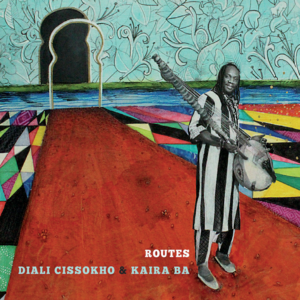
USA: Music Talks: Diali Cissokho & Kaira Ba Carve Unexpected New Routes From West Africa to the American South

North Carolina-based Senegalese kora master Diali Cissokho took his American bandmates from Kaira Ba back to his hometown of M’bour on a long wished-for trip to record an album together, what became Routes(Twelve | Eight Records; release: June 29, 2018).
Nearly fresh off the plane, Cissokho and bassist/ producer Jonathan Henderson dashed around the port city, looking at concrete-block room after concrete-block room. “We were wondering if we’d ever find the right space,” recalls Henderson. “Then Diali ran into an old friend at the mosque. He owned a hotel and showed us this really beautiful eight-sided, rattan-paneled room on the third story. You could see the ocean. For a week, we set the studio up there, using our engineer Jason Richmond’s mobile rig. And in the courtyard outfront, we recorded the big percussion parts.” Cissokho’s musical friends and family dropped by the seaside recording studio, laying down inspired cameos.
After their Senegal sessions, the band took the tracks back to North Carolina and wove in talented local musicians, from gospel vocals (“Salsa Xalel”) to gorgeous strings (“Naamuusoo”). “We wanted to tell the story of these two places Diali has called home,” explains Henderson. “We wanted to bring North Carolina and M’bour together on the record.” They enlisted the talent of world-class violinist Jennifer Curtis, North Carolina Heritage Award-winning mandolin player Tony Williamson, jazz and gospel vocalists Shana Tucker and Tamisha Waden, the great pedal steel guitar player Eric Heywood, and a handful of local jazz instrumentalists.
The results range from high-energy dancefloor-friendly to intimate and contemplative. Cissokho’s storytelling and musical prowess give direction to Kaira Ba’s American players, whose explorations and instincts carve new paths across the Atlantic, a mutual exchange and musical conversation that easily span oceans.
{full story below}
Cissokho comes from a long line of Mande musicians tracing back to the 16th-century Mali Empire, trained to foster exchange and spark conversation, soothing hearts and rousing spirits. Born into a family of griots, Cissokho learned from an early age how to play kora, sing, and craft songs to praise patrons, recall past events, and heal intense conflicts and emotions. “Badima” pays tribute to his family and its beautiful legacy, recalling a moment when family discord resolved into harmony.
Cissokho landed in North Carolina thanks to love, falling for and marrying an American student of Senegalese music. He felt lost at first, as he tried to find his musical bearings in his new home. He went to a lot of shows, met a lot of local musicians, and finally, through trial, error, and jam sessions, connected with a quartet of local artists who got him, and whom he got. After connecting with Cissokho, drummer Austin McCall brought the group together. It included Will Ridenour, who had studied djembe and kora extensively in Senegal and Mali, on percussion. Berklee-trained jazz guitarist John Westmoreland worked closely with Diali to incorporate the interwoven kora lines into his own playing. Jonathan Henderson, an ethnomusicologist with a background in jazz and afro-diasporic styles joined on bass.
The process took time. “Our instruments had to talk to each other,” explains Cissokho. “They had to follow my key, tune into me. I didn’t know how to explain. But then they heard the melody, and they tuned to me. I started to believe, okay, it’s coming. I didn’t lose my music from back home -- it’s always here with me. We spoke a different language. But music, as my dad would say, music talks.”
The gradual process of mastering each other’s musical speech, of building real friendships, unfolded over several years. Henderson and fellow Kaira Ba bandmates mastered the rhythms and melodic arcs that formed the heart of Cissokho’s music, while Cissokho picked up on their penchant for strong arrangements and funky hooks. They learned from each other, sometimes in complex, multi-layered ways that went far deeper than jamming or teaching each other licks.
One example of the in-depth conversation between Cissokho and Kaira Ba can be heard in the string quartet of “Alla L’a Ke.” “First we recorded Diali playing the song solo on kora. Then I went on a week-long retreat up in the mountains,” Henderson says. “I transcribed the kora playing and used it as the starting point for the string quartet arrangements. When I got back, I played him the midi output from the notation software. ‘That’s my hand,’ Diali said.” Though his musical fingerprints were all over the arrangement, it took a while for Cissokho and the rest of the band to warm up to the novel sound. Yet the strings bring another, warm layer to the more conventional Afropop palette.
Kaira Ba loves to buck expectations by tapping into less appreciated sides of Senegalese music--then adding an American twist. Salsa has long had a place in Senegalese listeners’ and musicians’ hearts, and “Salsa Xalel” shines a light on the style’s widespread popularity. “Salsa is a big deal in West Africa. My dad listened to salsa and played it and danced to it,” Cissokho notes. “I knew it from my dad. When my dad didn’t get along with his wives, he would play salsa and sing to them. I’d listen to the groove and the melody, how he put his finger to the string. That’s how I got into salsa,” a style Cissokho experimented with. In Senegal, they expanded Cissokho’s song by adding balafon and talking drum (tama) to the mix. Then, back in North Carolina, the band invited singers Tucker and Waden to contribute, blending in another layer of African-heritage sound.
Though the uptempo songs on Routes lock into funky, deep pockets, making for irresistible dance tracks, other pieces stretch into more tender territory. “Saya” came to Cissokho after his beloved mother passed away: “Right when we buried her, everyone started to walk back home. I couldn’t. I stayed in the cemetery. I started to turn home and this song came to my heart. I went to my uncle’s room. He used to play kora until he grew older. I asked him if I could borrow it, because I needed to play this song. My uncle and everyone told me no, we had just buried her, but then they listened to what I played and started crying.”
Though Kaira Ba kept a light touch, they invited Eric Heywood to add arcs of pedal steel. “We wanted to get out of the way and let the song shine, in its honesty,” Henderson recounts. “That was the first take, with just kora and vocal live. While some of instrumentation on other tracks took warming up to, the pedal steel was something that Diali connected with right away. There’s an expressive quality to it, somehow reminiscent of the human voice.”
The people and places of M’bour and the North Carolina piedmont express themselves on Routes as well, not only via Cissokho’s lyrics and stories or musical performances, but in atmospheric recordings that weave in and out of tracks. Recordings of markets, nighttime courtyard jams, and beach life sneak into the mix. As do the voices and the sounds--Carolina cicadas sing at the start the first track--of Cissokho’s new home, his new roots.
“We wanted to give people a window into how we put this together. The album opens with cicadas in North Carolina, but then at the end, by ‘Night in M’bour,’ we share the rich sonic experience of being in Senegal, listening to this other world of sound, hearing sabar drumming reverberating in the distance, the children chanting the Quran at night,” reflects Henderson. “We wanted to weave these sounds in. The record ends with a live performance by Diali’s nephew Mamadou. That final track really captured our time outside the studio, hanging out and playing music and singing songs, learning from each other.”