Showing posts with label India. Show all posts

Friday, October 21, 2022

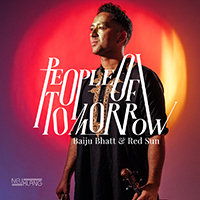
World Music Mix: Baiju Bhatt & Red Sun(India/Switzerland)-People of Tomorrow(2022)

Baiju Bhatt & Red Sun-People of Tomorrow

Baiju Bhatt & Red Sun(India/Switzerland)
Album: People of Tomorrow
Label: Neuklang

Baiju Bhatt & Red Sun

Nouvel album People of Tomorrow

Sortie le 28/10/2022 chez Neuklang

En concert à Paris au Pan Piper le 28/11/2022

Baiju Bhatt retrouve son groupe Red Sun pour un troisième album, People of Tomorrow, prévu le 28/10/2022 sur le label Neuklang, qui brouille encore davantage les frontières musicales.

Quatre ans après la sortie du singulier Eastern Sonata, qui mélangeait avec beaucoup de malice et de talent les influences d’une Inde fantasmée et du jazz-rock occidental, le violoniste et compositeur indo suisse Baiju Bhatt récidive et enfonce le clou en nous proposant un album encore plus ambitieux et puissant, doté d’une profonde richesse musicale, harmonieuse et subtile.

Un pied en orient, et un pied en occident, le violoniste Baiju Bhatt réalise avec People of Tomorrow un métissage audacieux entre jazz-rock et musique indienne, entre tradition et modernité.

Entouré par le quintet transalpin Red Sun et par le guitariste Nguyên Lê en invité, Baiju Bhatt & Red Sun forment un groupe alchimique où les différentes sonorités de chacun se fondent dans une parfaite harmonie. A eux cinq, ils effacent les frontières et mixent les cultures dans un grand feu d’artifice multicolore, virtuose et harmonieux. Un jeu fougueux au placement rythmique exemplaire, qui sait aussi devenir romantique et aérien.

Ancien élève de Jean Luc Ponty et Didier Lockwood, le violoniste Baiju Bhatt défend avec son groupe Red Sun un projet musical ambitieux plaçant au centre de sa recherche la quête d’identité et la volonté de faire chanter ensemble des mondes musicaux différents, en particulier le jazz et la musique indienne.

Avec People Of Tomorrow, nous voyageons à travers le monde et différents styles musicaux, et nous en ressentons toutes les saveurs, les odeurs et les épices, si bien que la notion de «musique du monde» prend ici sa pleine signification en effaçant toutes les frontières dans un grand feu d’artifice, chatoyant et multicolore.

Baiju Bhatt approfondit son langage musical et il nous épate encore davantage avec ses thèmes prégnants joués à l’unisson (saxophone-violon avec la complicité de Valentin Conus, ou piano-violon avec Mark Priore) et avec sa musique contrastée, faite de breaks et de ruptures rythmiques, qui multiplie les climats et les atmosphères. Une musique riche et complexe, formidablement bien construite et structurée, qui a l’intelligence d’être toujours accessible et fluide.

L’énergie musicale déployée est à la hauteur du lyrisme des différents solistes, parfois teinté de romantisme, à l’image du jeu de violon de Baiju, qui sait comme personne manier virtuosité et élégance et assembler, avec brio, musique classique, traditions du monde, musique indienne, et jazz-rock !

Baiju Bhatt & Red Sun :

Baiju Bhatt – violon, composition, arrangements
Valentin Conus – saxophone ténor, saxophone soprano
Mark Priore – piano
Blaise Hommage – basse électrique
Paul Berne – batterie
invité spécial : Nguyên Lê – guitare électrique


Baiju Bhatt is back with his group Red Sun for a third album, People of Tomorrow, scheduled for 10/28/2022 on the Neuklang label, which crosses musical borders even further.

Four years after the release of the singular Eastern Sonata, which mixed with great playfulness and talent the influences of a fantasized India and Western jazz-rock, the Indo Swiss violinist and composer Baiju Bhatt does it again and insists by offering us an album yet more ambitious and powerful, endowed with a deep musical richness, harmonious and subtle.

One foot in the East and one foot in the West, the violinist Baiju Bhatt achieves with People of Tomorrow a daring mix between jazz-rock and Indian music, between tradition and modernity.

Surrounded by the transalpine quintet Red Sun and by guest guitarist Nguyên Lê, Baiju Bhatt & Red Sun form an alchemical group where the different sounds of each blend in perfect harmony. The five of them erase borders and mix cultures in a great multicolored, virtuoso and harmonious fireworks display. A fiery game with exemplary rhythmic placement, which becomes romantic and ethereal.

Website Facebook Instagram

World Music Mix

Thursday, August 26, 2021

WorldMusicMix: Guy Buttery(South Africa)- One Morning in Gurgaon


Guy Buttery(South Africa)-December Poems
Composer: Guy Buttery
Album: One Morning in Gurgaon
Label: Riverboat Records (2021)
Website/CD Store
 A beautifully spontaneous collaboration between acclaimed South African guitarist Guy Buttery and Indian master musicians Mohd. Amjad Khan (tabla) & Mudassir Khan (sarangi), One Morning In Gurgaon was inspired by the trio’s shared appreciation of the musical wonders and landscapes of the subcontinent.(Read more)


Sunday, January 5, 2020

UK/USA/INDIA:John McLaughlin - Shankar Mahadevan - Zakir Hussain- Is That So? (Abstract Logix 2020)

Is That So?
Six years in the making, Is that So? is one of John McLaughlin's deepest and most profound musical collaborations with prolific Indian composer and vocalist Shankar Mahadevan. Joining the duo is their life-long friend and musical brother Ustad Zakir Hussain on the tabla, who has been collaborating with John since they founded Shakti in the early '70s, acknowledged by most to be the first groundbreaking crossover East-West musical group. 'The idea for this album appeared in my mind early 2013. Shankar and I had been touring with Shakti and I was constantly inspired by his superb voice and gigantic talent. Even though I had studied the theory and practice of Indian music for years, I remain a 'Western' musician and one aspect of Western music is the magic of harmony', says John. 'From the outset in the early 1970's, I constantly researched the possibilities of integrating harmony into the traditions of North and South India while at the same time keeping as close as possible to the melodic rules of the Raga system. However, the idea I mention above, was to abandon the rules of the Raga system completely and apply my own western harmonic liberty to the amazing voice of Shankar Mahadevan. ''Before concerts, John and I used to dabble with free improvisations using Indian scales (Ragas) and different harmonies backing them', says Shankar Mahadevan. 'The whole texture, color, feeling and the canvas of the music excited us as harmonic content does not exist in Indian classical music. In the beginning it was just a fun experiment, but it soon became larger than life and we knew we had to record it. When Zakir Hussain, the great tabla Maestro himself agreed to play in the improvisational sections we knew this would take our recording to a new level. We could not have asked for more. Is that So? is a a new concept in the meeting of musicians, singers, percussionists and the musical cultures of the East and West and takes us into unexplored musical horizons.

Monday, July 30, 2018

USA/INDIA: Dual Musicianship: Pianist and Hindustani Vocalist Anita Aysola Cross-Pollinates and Cultivates Personal Hybrids on Beyond Our Dreams

Anita Aysola

Dual Musicianship: Pianist and Hindustani Vocalist Anita Aysola Cross-Pollinates and Cultivates Personal Hybrids on Beyond Our Dreams

Years ago, the Indian-born, Michigan-raised, Atlanta-based singer-songwriter Anita Aysola was weighing a career as a concert pianist. One afternoon, however, she played a piece for her sister’s music professor. The professor listened carefully and asked one unforgettable question: “What if you brought your Indian classical training into this?” she wondered, pointing at the piano.
That moment stuck with Aysola for decades. Then, in 2008, she dived into a favorite raga and wrote “Long Way Home,” one of her first songs that bridged her two lifelong loves, Western classical and jazz, and Hindustani classical. Highly trained in both disciplines, Aysola uncovered how beautifully they could blossom together, once cross pollinated.
Aysola’s exploration and discovery are intimately American, a theme she unpacks musically, lyrically, and emotionally on her latest album, Beyond Our Dreams. Produced by a polymath actor and composer of Indian heritage, Samrat Chakrabarti, in collaboration with musical polyglots from the Brooklyn Raga Massive circle, Aysola’s songs fold radiant flights of Indian-style improvisation and rhythm into solid storytelling and piano chops. Think Anoushka Shankar meets Randy Newman.
“For a long time, I felt I had to be one or the other, Indian or American, in both my music and my life,” reflects Aysola. “Once I broke through that assumption, I realized the power of being both, of creating my own personal hybrid.” That hybrid speaks poignantly to our time of either/or, to divisive political and cultural rhetoric, with a tender but unforgiving tension, a heartfelt and incisive ambiguity.
Aysola never set out to be a professional musician, though she took both Indian and Western classical music seriously from an early age, studying piano and Hindustani classical vocals, singing in the school chorus and at Hindu religious gatherings, and playing in orchestra and band. She even took sitar lessons for a while. “I would play other music by ear,” recalls Aysola. “In Hindustani classical music, you learn how to play harmonium by ear, whatever you hear. So I’d listen to Tori Amos. She was the first person I heard growing up who was a female piano player who also sang and wrote at the same time.”
However, like many daughters of immigrant families, she resolved to find a more predictable professional career, and her formal education spans everything from engineering to international education policy. Yet music became increasingly important to the young artist, and she found herself longing to write songs, not simply perform other’s creations.
She began to study more Western styles involving improvisation, especially jazz and blues. While living in Chicago, she connected with master boogie-woogie blues pianist Erwin Helfer. There and while in grad school in Boston, she played everything from trip hop to jam-based rock to Indian fusion, before focusing more intensively on her own material. Then after a move to Houston, she met Gary Norian, who became her jazz piano mentor and frequent co-writer. Norian’s influence can be felt strongly on tracks like “Bet on Us,” with its rollicking, uplifting New Orleans meets gospel feel.
Her songwriting sprouted from all these seemingly disparate experiences, connected by her love of piano and Indian vocal approaches. “I felt this real need to bring all my passions into my music. To make it a home for both cultures,” Aysola recalls. “I’m one person in all these things, and my music could speak to all these things.” How this would work became a matter of experimentation. “I thought it would be the goofiest thing, sargam [solfege] improvisation over piano. I thought people would laugh,” she recalls. “People loved it. They wanted more.”
Inspiration can run in both directions for Aysola. For “Long Way Home,” she used a raga (raag desh) as a springboard for the song’s melody. “Beyond our Dreams,” written for her youngest child, “toggles between raag jog and jazz and the blues, especially in the piano solo” thanks to the role thirds play in the raga. For “America,” a love song for a country striving for universal ideals despite recent rancour, Aysola found the chords first, then began to play with Indian elements on top. “As I was finishing this song, I was jamming out with my new Hindustani vocal teacher,” says Aysola. “I realized the sargam felt really good with the chords I already had in mind.”
Aysola, with help from Chakrabarti, unites with musical kindred spirits on Beyond Our Dreams, artists who can move fluidly between Indian and Western styles. “Sameer [Gupta] plays the drum kit like a mridangam and the tabla like a drum kit. Everyone on the album,” including Arun Ramamurthy on violin and Jay Gandhi on bansuri flute, “brought that fusion sensibility. Samrat would suggest, ‘Hey try some alaaps [extended improvisions] here, that might work.’ Everyone got what I’m doing and could even encourage it, to help me find that sound.”
The lyrics in Aysola’s songs have a similar--and similarly complementary--dual nature, dwelling in two realities at once, be it as a person of two cultures, or of several callings, as a musician and a mother and wife. “Beyond Our Dreams” captures that tension and the hope and inspiration it brings, as Aysola sings to her newborn son and reminds herself that her journey continues, even though her life has been joyfully upended by her children’s arrival.
One thread runs through all her reflections, however: “You have to blend it and unify it. It’s hard to bring things together, but it’s essential.”

Contact

Publicist
Ron Kadish
812-339-1195 X 202

Thursday, July 26, 2018

USA/INDIA: Dual Musicianship: Pianist and Hindustani Vocalist Anita Aysola Cross-Pollinates and Cultivates Personal Hybrids on Beyond Our Dreams

Dual Musicianship: Pianist and Hindustani Vocalist Anita Aysola Cross-Pollinates and Cultivates Personal Hybrids on Beyond Our Dreams

Years ago, the Indian-born, Michigan-raised, Atlanta-based singer-songwriter Anita Aysola was weighing a career as a concert pianist. One afternoon, however, she played a piece for her sister’s music professor. The professor listened carefully and asked one unforgettable question: “What if you brought your Indian classical training into this?” she wondered, pointing at the piano.
That moment stuck with Aysola for decades. Then, in 2008, she dived into a favorite raga and wrote “Long Way Home,” one of her first songs that bridged her two lifelong loves, Western classical and jazz, and Hindustani classical. Highly trained in both disciplines, Aysola uncovered how beautifully they could blossom together, once cross pollinated.
Aysola’s exploration and discovery are intimately American, a theme she unpacks musically, lyrically, and emotionally on her latest album, Beyond Our Dreams. Produced by a polymath actor and composer of Indian heritage, Samrat Chakrabarti, in collaboration with musical polyglots from the Brooklyn Raga Massive circle, Aysola’s songs fold radiant flights of Indian-style improvisation and rhythm into solid storytelling and piano chops. Think Anoushka Shankar meets Randy Newman.
“For a long time, I felt I had to be one or the other, Indian or American, in both my music and my life,” reflects Aysola. “Once I broke through that assumption, I realized the power of being both, of creating my own personal hybrid.” That hybrid speaks poignantly to our time of either/or, to divisive political and cultural rhetoric, with a tender but unforgiving tension, a heartfelt and incisive ambiguity.
Aysola never set out to be a professional musician, though she took both Indian and Western classical music seriously from an early age, studying piano and Hindustani classical vocals, singing in the school chorus and at Hindu religious gatherings, and playing in orchestra and band. She even took sitar lessons for a while. “I would play other music by ear,” recalls Aysola. “In Hindustani classical music, you learn how to play harmonium by ear, whatever you hear. So I’d listen to Tori Amos. She was the first person I heard growing up who was a female piano player who also sang and wrote at the same time.”
However, like many daughters of immigrant families, she resolved to find a more predictable professional career, and her formal education spans everything from engineering to international education policy. Yet music became increasingly important to the young artist, and she found herself longing to write songs, not simply perform other’s creations.
She began to study more Western styles involving improvisation, especially jazz and blues. While living in Chicago, she connected with master boogie-woogie blues pianist Erwin Helfer. There and while in grad school in Boston, she played everything from trip hop to jam-based rock to Indian fusion, before focusing more intensively on her own material. Then after a move to Houston, she met Gary Norian, who became her jazz piano mentor and frequent co-writer. Norian’s influence can be felt strongly on tracks like “Bet on Us,” with its rollicking, uplifting New Orleans meets gospel feel.
Her songwriting sprouted from all these seemingly disparate experiences, connected by her love of piano and Indian vocal approaches. “I felt this real need to bring all my passions into my music. To make it a home for both cultures,” Aysola recalls. “I’m one person in all these things, and my music could speak to all these things.” How this would work became a matter of experimentation. “I thought it would be the goofiest thing, sargam [solfege] improvisation over piano. I thought people would laugh,” she recalls. “People loved it. They wanted more.”
Inspiration can run in both directions for Aysola. For “Long Way Home,” she used a raga (raag desh) as a springboard for the song’s melody. “Beyond our Dreams,” written for her youngest child, “toggles between raag jog and jazz and the blues, especially in the piano solo” thanks to the role thirds play in the raga. For “America,” a love song for a country striving for universal ideals despite recent rancour, Aysola found the chords first, then began to play with Indian elements on top. “As I was finishing this song, I was jamming out with my new Hindustani vocal teacher,” says Aysola. “I realized the sargam felt really good with the chords I already had in mind.”
Aysola, with help from Chakrabarti, unites with musical kindred spirits on Beyond Our Dreams, artists who can move fluidly between Indian and Western styles. “Sameer [Gupta] plays the drum kit like a mridangam and the tabla like a drum kit. Everyone on the album,” including Arun Ramamurthy on violin and Jay Gandhi on bansuri flute, “brought that fusion sensibility. Samrat would suggest, ‘Hey try some alaaps [extended improvisions] here, that might work.’ Everyone got what I’m doing and could even encourage it, to help me find that sound.”
The lyrics in Aysola’s songs have a similar--and similarly complementary--dual nature, dwelling in two realities at once, be it as a person of two cultures, or of several callings, as a musician and a mother and wife. “Beyond Our Dreams” captures that tension and the hope and inspiration it brings, as Aysola sings to her newborn son and reminds herself that her journey continues, even though her life has been joyfully upended by her children’s arrival.
One thread runs through all her reflections, however: “You have to blend it and unify it. It’s hard to bring things together, but it’s essential.”

Contact

Publicist
Ron Kadish
812-339-1195 X 202

Sunday, April 1, 2018

INDIA: Muddato Baad - Midnight At Two(2018)


Muddato Baad
Written & Composed by - Swapneel Mahindre Vocals by - Shiksha Sharma Guitars by - Ramil Ganjoo Drums by - Antony M. Upright Bass by - M. Brandon Keys by - Akshay Badone


Thursday, July 21, 2016

USA/INDIA Sarathy Korwar - Day To Day (2016)


The extraordinary debut album from percussionist, drummer and producer Sarathy Korwar – “Day To Day” – fuses traditional folk music of the Sidi community in India (combining East African, Sufi and Indian influences) with jazz and electronics. It’s a collaborative release by Ninja Tune with The Steve Reid Foundation – a charitable trust established by Brownswood / Gilles Peterson with the dual objective of helping musicians in crisis and also supporting emerging talent. Sarathy is an alumnus of the Foundation’s development program, mentored by Four Tet, Emanative, Floating Points, Koreless and Gilles Peterson – all trustees of the foundation.

“Sarathy instantly caught my attention when he said he wanted to make an album that embraced both Indian folk music and jazz - two worlds that have had a big influence on me. His album succeeds in bringing these things together in an elegant way, but it’s his own style and ideas that come through the most in the music. Refreshingly different, this is a deep and powerful listening experience.” Four Tet

The Steve Reid Foundation commemorates the life and legacy of legendary percussionist/drummer Steve Reid. It is fitting that Sarathy’s album follows the lineage and spirit of Reid who himself left New York and took on a spiritual pilgrimage through Africa in the mid-1960s. For three years he journeyed through West Africa, playing with people along the way, including Fela Kuti, Guy Warren and Randy Weston. The musical roots and routes of the Black Atlantic have been discussed and documented extensively, but Sarathy is highlighting a different dispersal of people in the other direction, from East Africa to India. The Sidis travelled to India from Africa as merchants, sailors, indentured servants and mercenaries from as far back as 628 AD and have settled in India ever since.

Conceived on an extended trip to rural Gujarat, followed by sessions at Dawn Studios in Pune, Sarathy made field recordings of The Sidi Troupe of Ratanpur whose vocals and percussion form the backbone of “Day To Day”. The troupe features five drummers – their polyrhythms reflect their African heritage, in contrast to traditional Indian drummers who play in unison. Likewise, the Malunga bows (there are only 4 or 5 players in India) bear a striking resemblance to those found in Africa.

Thursday, April 21, 2016

JazzWorldQuest Free Mp3 List downloads and Playlist update: Robin Menuett Trio, Moula Groupe, Colin D’Cruz, Mr Addai, Tony Adamo


Free promotional mp3 downloads – jazz and world music


Musician: David Ellington
Track: Bridgetown-Featuring Bridget Kitson
Album Name: Marbles from a Drawer
Label: Blue Canoe Records
Year of release: 2016
Musician/Label Website

Musician: Robin Menuett Trio
Track: St. Pierre’s Place
Album Name: St. Pierre’s Place
Year of release: 2016
Composer: Jazzmond Robinson
Musician/Label Website
St. Pierre’s Place was composed by Jazzmond Robinson former pianist for Joe Sample and the Krusaders 2.0
Musician: Moula Groupe
Country: Cameroon
Track: Ne dan mbole
Album: Ngoss’a Ndimssi
Year of release: unreleased
Composer: Jack Sele
Musician/Label Website
Musician: Colin D’Cruz
Country: India
Track: Seven
Album: Jazz Yatra
Label: Jazz Goa
Year of release: 2016
Composer: Colin D’Cruz
Musician/Label Website
Musician: Mr Addai
Country: Ghana
Track: Hyira Me
Album: Hyira Me
Label: Murdeikline Rekordz
Year of release: 2016
Composer: Mr Addai
Gospel Musician, Mr Addai from Ghana releases Maiden Album, ”Hyira Me”


Tuesday, March 8, 2016

INDIA: JazzWorldQuest Web Player Update:Seby Fernandes- Ekiratcho Mog

 Veteran singer/composer Seby Fernandes shot to fame with Chris Perry's 'Mira Mira' recorded way back in the late seventies. His latest song 'Ekiratcho Mog' is a collaboration with some great jazz musicians including guitarist Gerard Machado, saxophonist Oleg Kasper, pianist Jason Quadros and bassist Colin D'Cruz. The track is part of the album 'Konkani Jazz' produced by Jazz Goa and it features some of Goa's most accomplished singers and musicians. 

The album is available as a free download at www.jazzgoa.com
Contact Seby on 9921769123
Download Konkani Jazz over here: https://www.reverbnation.com/konkanijazz

Saturday, December 5, 2015

INDIA: Jazz Utsav


Jazz Utsav 2015 

BRINGING JAZZ TO INDIA

The Jazz Utsav 2015 is a 2 day festival of Jazz featuring some of the best known jazz artistes from India and across the globe. It is in its 31st year, and has in the past featured some of the best names in the Jazz world, like Sonny Rollins, Larry Carlton and Wayne Krantz. This year the headliners are Rudresh Mahanthappa's Gamak from USA, and Artur Dutkiewicz Trio from Poland on the 5th and 6th respectively. SO this 5th and 6th December, be a part of the definitive jazz experience in Delhi!!
Greaterkashmir.com
http://jazzutsav.teamworkarts.com/ 

Sunday, March 30, 2014

Jazz Goa sets a world record!

 Jazz Goa came up with a great idea about a year ago, inviting musicians from all over the world to contribute their solos to a jazz standard called 'Straight No Chaser'. The idea caught on via the internet and Jazz Goa has been flooded with contributions from jazz virtuosos from all over the world. The track so far features seventeen soloists, a world record for any jazz standard recorded so far, and it is continuously updated with new soloists being added almost every week. Jazz Goa's Global recording project literally brings the world together in one phenomenal track. So far the recording features jazz virtuosos from America, Colombia, France, Canada, Japan, Germany, Switzerland, England, Portugal and Goa of course. The track has generated huge interest among jazz communities around the world and Jazz Goa now has to carefully curate contributions so that only the best make it to the mix. The project so far, can be reviewed at www.jazzgoa.com


website: www.jazzgoa.com

Tuesday, October 15, 2013

Interview with jazz bass player Colin D'Cruz from Goa, India.

1) What is your opinion regarding the present jazz scene in Goa?
CD: If there is a jazz scene in India it has to be right here in Goa. No where else in India will you find hundreds of venues that feature live music, many of which host a jazz night at least once a week. Calcutta used to be a jazz hub in the 60's and it shifted to Mumbai in the 80's from where it moved to it's rightful home in Goa, considering the amount of Goan's who have made their mark in this great form of improvised music.

2) Goa has often been called the Jazz capital of India. Would you agree or disagree with this and why?

CD: Absolutely and I would go even further to call it an international jazz hub. Some of the world's greatest jazz artistes have found a home in Goa, returning every year to enjoy the inspiring environment that our beautiful state offers to just about any creative artist. I have recorded some phenomenal visiting artistes at my studio in Sangolda. And each one of them has helped raise the bar for my band as well as for my studio. Many of these visiting artistes also realise that it is easier for them to get a booking in Goa than back home where live performance opportunities keep getting rarer by the day.

3) Do you receive a lot of Goan audience or is it mostly tourists at your concerts?

CD: One more reason why Goa is an international jazz hub is the fact that local bands often feature international artistes and perform to international audiiences. Why go out to the rest of the world when the rest of the world comes to Goa? Goans are generally music loving people and they enjoy any music that sounds like music and if it gets them to dance you've nailed it. Jazz is more of a musicians music and is enjoyed best when you understand the nuances of improvisation, for those who don't, it's the sheer virtuosity of a good performer that blows them away. Very often people meet me after a gig with 'what was that?' and then they answer themselves wit!
 h 'that
was great!'

4) What do you think is the attitude of the youth towards Jazz music?

CD: The youth today are tuned in to DJ's more than into jazz or music performed by band's in general. It's just another phase in the evolution of music and i'll go with the flow without wanting to debate about it. To me music has to be made by a musical instrument, to many it could be made with machines and to each their own! Technology has made things a lot simpler both in case of performance as well as production. The trick is to harness technology to hone your skills on a musical instrument or vocal chords if you are a singer. I often tell youngsters who ask for my advice to learn a musical instrument before they learn a machine.

5) What is the future of Jazz in Goa?

CD:The future of jazz in Goa like in the rest of the world is wide open. Jazz is the only form of music that embraces all other sounds of music. So there's rock-jazz, pop-jazz, funk-jazz, fusion-jazz, blues-jazz and there will be a -jazz attached to every form of music that comes along. If DJ music is popular today, well there's DJ-jazz! The most exciting thing about jazz is what comes next with due respect to what happened in the past. Onstage, it is often anticipating your fellow musicians next improvised notes and nailing it in one spontaneous unison phrase. The future is always uncertain but there's one thing for sure, you'll find a new form of jazz sneaking up on you any time and all the time. You can keep yourself updated with the current jazz scene in Goa at www.jazzgoa.com

AVAILABLE NOW: Author RADHIKA PHILIP Reveals Creative Process of Jazz Musicians Through Collection of Interviews in New Book, "Being Here: Conversations on Creating Music"

AVAILABLE NOW:
Author RADHIKA PHILIP Reveals Creative Process of 
Jazz Musicians Through Collection of Interviews in New Book, 
Being Here: Conversations on Creating Music

Featured Artists Include Bill Frisell, Brian Blade, Jason Moran, Robert Glasper, Vijay Iyer and Maria Schneider, Among Others

Stream audio excerpts from interviews featured in the book: 
 
Radhika cover

"This work, expressing the living aesthetic of some of the most vital musicians of our time, is so important now because the corporations are trying to erase any trace of serious music from a planet they want to own completely." 
- Amiri Baraka

Anyone who loves jazz has undergone a similar awakening at some point in their lives. For Radhika Philip it came about a decade ago, when she followed a yen for live music into the West Village club Smalls to see pianist Jason Lindner's trio. While she had a handful of jazz records at home, scattered classics by the usual suspects - Miles Davis, John Coltrane, Thelonious Monk, Charlie Parker - the experience of seeing contemporary creative music in an intimate setting proved to be transformative.

"It was the music, of course, but it was also the intensity of the interaction on stage," Philip recalls of that night. "The expression on people's faces as they made music together - the bliss in the discovery, and the intimate and focused ways in which they communicated with each other - I'd never seen anything like that before. It completely blew my mind."

For most people it would have been enough to follow that profound encounter with more of the same, to simply become another devoted listener and advocate of jazz and its creators. But Philip decided to go further, embarking on a decade-long series of interviews with some of New York's most renowned and influential artists in order to come to a deeper understanding of the music and of those who build their lives around it.
radhika

Being Here, which is available now through Radhio, compiles 25 of those interviews, featuring candid, insightful conversations with such modern jazz greats as Andy Bey, David Binney, Brian Blade, Jane Ira Bloom, Uri Caine, Steve Coleman, Dave Douglas, Bill Frisell, Robert Glasper, Billy Hart, Vijay Iyer, Jason Moran, Gregoire Maret, Ben Monder, Thomas Morgan, Butch Morris, Greg Osby, William Parker, Chris Potter, Dafnis Prieto, Maria Schneider, Henry Threadgill, Mark Turner and Kenny Wollesen. The focus of her inquiry is the relationship between form and freedom - the parameters, musical and relational, that frame their improvisations.

Born in Bombay, India, Philip moved to the United States to study anthropology, first at Smith College and later at Columbia University. She has brought this education to her examination of New York City's intricately interwoven jazz community, adding a layer of insight beyond that which even the most ardent club devotee could offer. "The questions I asked were anthropologically informed," she explains. "What meaning do people give to what they do? What do they value? What are their practices? All of that speaks to what culture is."

The one thing all of the subjects, and the author herself, share in common is the city of New York, where many of them live and all have created significant work. "I've lived in New York for 25 years," Philip says. "It's a city with so many subterranean art scenes, andI've always wanted to document one of its creative communities, to pay homage I guess, to the city and its artists. I also wanted to better understand the ways in which this urban center is important, or not, to an art form. When I walked into jazz, that initial idea founds its most meaningful context for me, and became a compulsion." 

The title, Being Here, is in part a recognition of the city's role in linking artists. But it also reaches a more meaningful truth about their creative process - not to mention the lively and enlightening conversations to be found within its pages.

"My being in New York enabled me to have this experience," Radhika says. "So the title refers to the musicians and why they need to be here, why the city is relevant to the music. That's how it started for me, but it's also about improvisation and the art of being entirely present in the moment. Ultimately, that way of being is what deepens human experiences and relationships."

Being Here - Radhika Philip

The Interviews by Chapter:
1. Bill Frisell
2. Kenny Wollesen
3. Butch Morris
4. William Parker
5. Henry Threadgill
6. Dafnis Prieto
7. Billy Hart
8. Brian Blade
9. Greg Osby
10. Jason Moran
11. Woody Shaw Jr. III
12. Robert Glasper
13. Vijay Iyer
14. Mark Turner
15. Steve Coleman
16. Gregoire Maret
17. Maria Schneider
18. Ben Monder
19. Dave Douglas
20. Uri Caine
21. David Binney
22. Thomas Morgan
23. Chris Potter
24. Jane Ira Bloom
25. Andy Bey

Radhika Philip·  Being Here
Radhio ·  Release Date: October 14, 2013
 
For more information on Radhika Philip, please visit: radhio.org

For media information, please contact:
DL Media ·  610-667-0501
Amy Miller · amy@dlmediamusic.com 
 
Information and press materials (including album covers, promotional photos
and bios) on all DL Media artists can be found at our new website: dlmediamusic.com