Showing posts with label Articles. Show all posts

Tuesday, June 19, 2018

USA: Jazz Notes Intel: Guitarist Russell Malone Gets Saluted; Dafnis Prieto Big Band Latin Marvel & More


Jazz Notes Intel: By Dan Ouellette
Guitarist Russell Malone Gets Saluted; Dafnis Prieto Big Band Latin Marvel; Roots Flair With Marcia Ball and Irresistible Trio Pianism by Django Bates

shem.gif
By Dan Ouellette, Senior Editor ZEALnyc, June 8, 2018
Maestro guitarist Russell Malone thanks six-string elder Kenny Burrell for giving him invaluable advice thirty years ago to advance his career. “Kenny told me to always be consistent,” the 54-year-old Malone said in a phone conversation from his New Jersey home shortly after returning from headlining a doubleheader of jazz festivals in Jacksonville, FL and Atlanta. “You’ve got to always play well and remember that people fly or drive to pay money to see you. For me the most important thing is to consistently reach the listener. A lot of musicians start out working to gain the respect of their peers, but after a while they try to live up to someone else’s idea of what jazz music is. That’s a recipe for disaster.”

Throughout his career, Malone’s true-to-myself wisdom has been lauded and appropriately is celebrated this year by Jack Kleinsinger, a former New York assistant attorney general who became a vital jazz impresario presenting his unique four-show Highlights in Jazz concert series. In its 46th season, it’s the longest-running jazz concert series in the city. Launched in 1973, he has produced more than 300 concerts with such classic jazz stars as Zoot Sims, Roy Haynes, Clark Terry, Dizzy Gillespie, Max Roach, Dave Brubeck, Billy Taylor, Woody Herman and Billy Higgins, among many others.

Each year for the season’s finale, Kleinsinger pays tribute to an alive-and-well artist. This year on Thursday, June 21 at the Borough of Manhattan Community College’s Tribeca Performing Arts Center, the honor goes to Malone. “Russell is the youngest artist ever saluted,” he said, running down a long list of former honorees, including his very first, Lionel Hampton, and Malone’s mentor Burrell. “When I was beginning to do concerts, I was thinking of how tired I was going to memorials for jazz stars who had passed away. That’s when I started doing the salutes, bringing together different styles across the generations.”

Russell Malone; photo: Chris Drukker.

For more on Russell and the column" go to this link:


Wednesday, May 16, 2018

USA: Dan Ouellette's Jazz Notes Intel: Long Live Fred Hersch; Artist Mark Rothko Treated to the Jazz Vibe: Zealnyc

shem.gif
The new monthly ZEALnyc column "Jazz Notes intel" features a conversation with Fred Hersch, catching Latvian jazz inspired by the artwork of Mark Rothko at Baryshnikov Arts Center, and new music by Henry Threadgill and archival music by Ella & Pops Link:

Tuesday, September 8, 2015

USA: Jazz Papers: Categories and networks in jazz evolution: The overlap between bandleaders’ jazz sidemen from 1930 to1969


This paper expands on Peterson’s process model for historical changes in jazz. Peterson suggests that, given certain circumstances, musical genres migrate from ‘low-brow’ to ‘high-brow’.I test this proposition for jazz by investigating whether bandleaders were associated through the same sidemen (‘sidemenoverlap’) across time, and the underlying logics leading to these overlaps. I confirm Peterson’s model to the extent that sidemen overlap shifts from a ‘commercial’ logic to a ‘style-based’ logic. From1930to1949, sidemen overlap between bandleaders is mainly predicted by recording session.

Saturday, April 4, 2015

Jazz papers: A Taste for Chaos: Creative Nonfiction as Improvisation / Emotional Processing in Music: Study in Affective Responses to Tonal Modulation in Controlled Harmonic Progressions and Real Music


Since Montaigne, the rhetoric of spontaneity — spontaneity as a rhetorical device — has been a characteristic ingredient in creative nonfiction. “Is it reasonable,” asks Montaigne, "that I should set forth to the world, where fashioning and art have so much credit and authority, some crude and simple products of nature, and of a feeble nature at that? Is it not making a wall without stone, or something like that, to construct books without knowledge and without art? Musical fancies are guided by art, mine by chance" (611). Montaigne points to the implicit dialogue with artifice that lies...

Download Bookmark

Tonal modulation is one of the main structural and expressive aspects of music in the European musical tradition. Experiment 1 investigated affective responses to modulations to all 11 major and minor keys (relative to the starting tonality) in brief, specially constructed harmonic progressions, by using six bipolar scales related to valence, potency, and synaesthesia. The results indicated the dependence of affective response on degree of modulation in terms of key proximity, and of mode. Experiment 2 examined affective responses to the most common modulations in 19th-century piano music:...

Download Bookmark

Saturday, February 28, 2015

Jazz papers at Academia.edu

Winifred Atwell and her 'other piano': 16 hit singles and a 'blanket of silence', sounding the limits of jazz by George McKay

From Tunapuna, Trinidad, Winifred Atwell (c. 1914-1983) was a classically trained ragtime and boogie-woogie style pianist who gained quite remarkable popularity in Britain, and later also Australia, in the 1950s, in live and recorded music, as well as in the developing television industry. In this chapter I outline her extraordinary international musical biography as a chart-topping pop and television star—innovative achievements for a black migrant female musician which are arguably thrown into more dramatic light by virtue of the fact that Atwell has been and remains a neglected figure in...
    Download 


Play Together, Think Alike: Shared Mental Models in Expert Music Improvisers
by Clement Canonne

When musicians improvise together, they tend to agree beforehand on a common structure (e.g., a jazz standard) which helps them coordinate. However, in the particular case of collective free improvisation (CFI), musicians deliberately avoid having such referent. How, then, can they coordinate? We propose that CFI musicians who have experience playing together come to share higher-level knowledge, which is not piece-specific but rather task-specific, i.e., an implicit mental model of what it is to improvise freely. We tested this hypothesis on a group of 19 expert improvisers from the...
    Download

High Art
by Rashid Booker
 Download

“Ethnicity and Musical Identity in the Lyric Landscape of Early Cyprus”, Greek and Roman Musical Studies 2 (2014), 146–76.
by John C Franklin
Download

Sunday, August 18, 2013

South African jazz has never been better!

Jazzaholic by Don Albert: Just after our first democratic elections there was a giant step forward in SA jazz which went through a dynamic change.

Artists could get passports and they travelled overseas and discovered it wasn’t worthwhile cloning what was already there, so they decided to use African rhythms and tunes and mixed it with a back-beat and contemporary jazz rhythms. It was fresh and inventive and record companies started recording African jazz artists. (...)

Sunday, July 21, 2013

At 43 Nigeria’s Jazz Diva, Yinka Davis Comes Of Age

When Popular Names Like Ella Fitzgerald, Billie Holiday, Bessie Smith And Renee Olstead Of Blessed Memory, Who Have Made A Mark Globally In The World Of Jazz Music Are Being Dropped, Nigeria’s 43 Year-Old Highly Eclectic Vocal Power-House, Elfreda Yinka Davies Is Unarguably Her Country’s Foremost And Most Experienced Surviving Female Jazz Act. She Spoke To Adedayo Adejobi Recently

How do you label a woman who has composed a number of timeless folk songs based on the realities of the African daily life and struggles? The mixed grill of a husky voice that is clear and cool, yet slippery and swirling around you.

Likewise, imagine touching thick pile, silk velvet. The response is warm, breathy, deep, soft, so cushy and absolutely luxurious. When you hear Yinka’s voice in the art of delivering different genres, she puts in varying characters thus creating various pictorial and emotive scenarios through her voice, yet when we listen, the response is the same. You melt in the luxury of Elfreda Yinka Davies’ sound.

The tones of the singer and songwriter, is no doubt a delight to the pop, classical audiences  with a taste for rich African music laced with jazz improvisations, in addition, a confusion to music critics.


Monday, December 31, 2012

ARTICLE: Did the American songbook kill jazz?

The whole record industry, of course, is ailing, but jazz has a special place in the infirmary. In 2011, jazz recordings made up a hair over 3 percent of albums sold, according to Nielsen SoundScan — and that’s counting watered-down forms like “smooth jazz.” The year before, the numbers were significantly worse. In fact, jazz record sales are so low that a pro forma Christmas record by Michael Buble — who sings over a wash of elevator music and is only a jazz artist by generous definition — made up almost a quarter of the total jazz sales in 2011, creating the illusion that the music had experienced a huge growth spurt. (The 11.1 million jazz albums that sold last year mean that, all things being equal, for every person who bought just one jazz record, 27 did not. Similarly, for everyone who bought two jazz records, 54 people purchased nothing.)
 Full article by SCOTT TIMBERG/Salon.com

Tuesday, October 16, 2012

OPINIONS/ARTICLES: Vijay Iyer and the Outreachification of Jazz


"The truth is that jazz is a wonderful, nuanced genre that, like world music, inherently has a smaller potential audience than rock, pop, R&B, and rap. If there is a problem--and the jazz establishment's obsession with "outreach" and building its base suggests it believes there is--it isn't with the audience or its access to the music. It's with the artists. If they want to be heard by a larger audience, then they need to bring their music closer to what that audience likes. That's going to take a different kind of album than Accelerando." -  Vijay Iyer and the Outreachification of Jazz  / By Chris Kornelis / Seattle Weekly Blogs


Tuesday, February 28, 2012

USA: Can a massive jazz museum take root in Chicago?


Back in the 1990s, several influential Chicagoans joined forces to try to build a National Jazz Museum here.
They quickly raised $350,000 in seed money to launch an institution that would do for jazz what Symphony Center does for classical music or the Lyric Opera of Chicago for music drama: provide a world-class venue that nurtures the art form.
Better still, the proposed National Jazz Museum would achieve what none of its Loop counterparts attempted, giving music with African-American roots high visibility in a downtown cultural grid mostly devoted to white, European-derived art.
But the effort lost steam in 1999, when the City of Chicago turned down the planners' proposal to take over a choice parcel of land up for redevelopment at the northwest corner of Roosevelt Road and Michigan Avenue, where the decaying Avenue Motel once stood. After that setback, the National Jazz Museum quickly faded into memory.(Full article written by Howard Reich)

Monday, February 13, 2012

GRAMMY AWARDS JAZZ 2012


Improvised jazz solo: Chick Corea – 500 Miles High
Jazz vocal album: Terri Lyne Carrington & Various Artists – The Mosaic Project
Jazz instrumental album: Corea, Clarke & White – Forever
Large jazz ensemble album: Christian McBride Big Band – The Good Feeling

Grammys tune out the best improvised jazz solos


The Grammys don’t know jazz.
Nowhere is this more evident, year after year, than in the award for best improvised jazz solo. Because most Grammy voters probably don’t spend much time thinking about what constitutes an exceptional solo, the same figures get honored year after year. The choices are safe, and they’re the biggest names in jazz.

Herbie Hancock, Wynton Marsalis, and Oscar Peterson have each won that award three times. Michael Brecker won it an astounding six times. If the National Academy of Recording Arts and Sciences is to be believed, these four folks have recorded nearly half of the best solos in jazz since 1977.
Read the full article @: Grammys tune out the best improvised jazz solos  Steve Greenlee BOSTON.COM


Friday, October 28, 2011

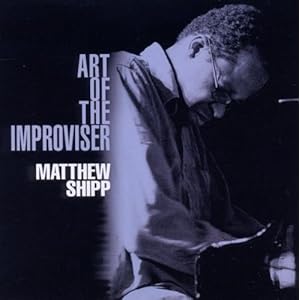
Matthew Shipp – Art of the Improviser (Thirsty Ear; 2011) Review by Steve Dalachinsky

What Is This Thing Called Shipp?
by Steve Dalachinsky

Matthew Shipp – Art of the Improviser
Thirsty Ear 57197 – 2cds

Matthew solo live in Paris January 28, 2011
Matthew Shipp Trio live at (Le) Poisson Rouge March 7, 2011

Recognizable materials:
Piano
Pianist
Standards / or at least fragments of such
Improvisation

Recently I had the pleasure of seeing a Matthew Shipp solo gig in Paris. This was followed a bit more than a month later by a trio gig at (Le) Poisson Rouge in Manhattan to celebrate his most recent cd Art of the Improviser, which itself celebrates Shipp’s now more than 20 odd years as a major force on the “Jazz” scene. The solo concert which was part of the 20th anniversary of the French Sons D’ Hiver Festival was one of the highlights of my more than two month stay in Paris but not so for everyone who heard it as the following account will show.
The day after that gig Shipp received a Facebook message which I am sharing in its entirety with Shipp’s permission.

We don't know each other (and probably never will), but I just HAD to write to you after hearing your piano solo at the Sons d' hiver festival last night at Choisy le Roi. I'm a pianist/percussionist working for the past 35 years in contemporary dance, so I'm naturally attracted by improvisers who belong to NO category. I actually went to the concert to hear what Geri Allen was going to do with  the tap dancer, and after reading some very interesting reviews of you, thought it would be great to discover an innovative  pianist I'd never heard before. What followed was beyond description. The first few moments I was captivated by your completely 'organic' visceral approach, your physical relationship with the piano, your obviously monstrous technique and completely personal voice. I very quickly began to hear and feel a sense of an anger (even rage) coming directly from the stage. I felt overwhelmed by the sheer force of rage and couldn't get out of the hall without falling over the latecomers who were sitting on the stairs, so I had to sit it out. It was like being stuck in a nightmare. After an hour I was secretly pleading with you to STOP. At one point they even put the lights on briefly, but you didn't take the hint. After some mild applause, you went right back, but I could get out and ran for the door! I was physically shaking and feeling totally aggressive to the extent that I had to discuss my feelings with the guy who was selling some books in the hall. (He couldn't have cared less, but at least I was evacuating some of the negativity I felt.) I was furious and shaking and feeling MEAN. So why am I writing to you? Because I've never felt that from a performance and I think you have the right to know how you can affect people. I'm not criticizing your choices or trying to put you down, I just need to let you know how NEGATIVE the whole experience was for me in terms of whatever 'vibes' you were putting out. You may be a 'genius ' and an innovator and far ahead of the rest of the crowd, but all I felt was a monstrous technician in a total egotistical rage who was in the middle of a primal scream. I would have preferred not to have shared such an intimate moment with you, but then I had no idea what I was in for.

Shipp’s reply was essentially that “the negativity she felt was her own and that she should assume he was a genius and that obviously his music brought up a bad feeling of inadequacy in her she being a pianist herself.” He also told her to check herself out because she must be disturbed to begin with.
Well she did get a few things right however. Shipp is “innovative” and can be dark and aggressive. Certainly has a “completely visceral organic approach” as well as “monstrous technique.” “A completely personal voice” and his “physical relationship with the piano” is so well integrated, even at times childishly clumsy, due to his complete intimacy and oneness with it at this point. It’s sort of like playing with your private parts to the fullest capacity possible.

Shipp’s most recent cd Art of the Improviser consists of two live concerts discs recorded in 2010. Disc One a trio recorded at The Arts Center of The Capital Region in Troy New York and Disc 2 a solo recorded at (Le) Poisson Rouge (which I attended). Both like the two recent gigs from 2011 were also coincidentally were only a month or so apart.

On both cds and in the recent live performances what you have is a similar distillation of energies. In all cases the contents of these concerts put forth a portrait of Shipp not for what he is or was but what he has become and will be. A dynamic force of well integrated improvisation(s) dealing with light and dark, lighthearted seriousness and the apex of what I term chaotic structuralism at its best.

As the title of the cd suggests this is about a man who has made his work into his art. Here we have a new type of jazz as well as a new brand of improvisational structuring within the already fairly compact, barely unlimited boundaries of jazz. A re-invention of the classic mold begun and broken by the likes of Armstrong, Tatum, Powell, Monk and Taylor to name but a few.  A reconfiguration of the solo. A synthesis of bop, hard bop and avante garde or as Shipp has often termed it Nu Bop, which I have finally come to understand. 

Not a derived content or language. Not a suspended imagination like most of his colleagues but one that floats. Not a fixed reaction to one’s surroundings or instrument but a constant urgent immediacy. A new speaking in tongues. In other words an organic  language predicated entirely on a transfixed set of unruly rules rather than a mere how-to primer. 
In both cds and recent concerts Shipp displays his mastery of composition as well as his knowledge of the classics. In his solo performances he smashes us with his 4D world then flies us gently though quirkily to the moon after which he takes us on the usual unusual ride of complexity with such wild spontaneous compositions as Wholetone, Module and Gamma Ray. In both settings he always fills us with his own philosophical musings fragmenting, pounding the music into shape as a sword-smith pounds molten metal into the shape of a fine honed blade.
In his trio performances he applies the same patterns only the ideas flow less densely, more quickly and perfectly integrated with the fine backing of the great rhythm section of Michael Bisio on bass and Shipp’s long time associate Whit Dickey on drums.
On the trio cd, made up mostly of Shipp originals we are given the New Fact(s) as Shipp sees them and then lead into an exemplary trio piece 3 in 1 with Dickey taking a totally splendid full out drum solo. After a furious but gently flowing Circular Temple Shipp leads the trio on a wild ride uptown with one of his many renditions of a perfectly intact “Take the A Train” bringing us back downtown with his probing study entitled  Virgin Complex.
At the recent trio gig at Poisson Rouge Shipp went from a slow balladic start into an immediate flurry of runs, faltering at times then straightly yet crookedly driving a path that follows many passionate trajectories. And once that passion begins to flow it never lets up and we leave the concert or get up from the couch if experiencing the cd, flooded by wave upon wave of musical complexity and scary beauty. The Nu bop language both here and on the new cd is displayed with all its flashes of brilliance and displacement which includes Shipp’s unique down stroking of the mid-range keys and his gentle plucking at the inside strings, which he is getting better and better at and which he now almost always places in just the right places. Bisio fans the flames while Dickey splashes color all over the room. This is a music of shifting paradigms, of stopping and starting on a dime, of insane inconsistencies that shouldn’t work but do. Taking the piano apart and at times beating it mercilessly with a choppy, frail sometimes unattractive ambience. Bisio’s crunching arco bowing heightening the tensions already created by Shipp. The set augmented by Shipp’s signature fragmenting of standards in this case a sudden dive into “What is this thing called Love?” Then after a wonderfully flashy Dickey solo Shipp re-enters with his usual gloom/doom type chords which miraculously lead into a both playful and frightening version of “Frere Jacques” bringing the set to a close.

On all of these occasions Shipp has once again shown us all aspects and facets of his playing, his intellect, spirit and soul. He has provided us with this new concept of space.
This feeling of spaciousness while at the same time leaving us little space to breath.   
His complete ability to ramble allowing his muses to take full control or at least making them think they are in control all the time pulling the strings while seemingly exercising total abandon, jabbing those major chords while manipulating and dismantling the minor ones.
I wonder what that gal who Facebooked Shipp would feel/do if she played these cds over and over again in her tiny little room. Jump out the window in an ecstatic frenzy or simply walk over to the Seine go insane and throw herself and the cds into the drink?

After this recording any similarity to things/materials/ musics alive or dead is purely coincidental.
So what is this thing called Shipp you ask? Buy the cd and find out.

Wednesday, October 19, 2011

Ben Wells Bassist of the year


While he claims that his personal style on bass is still a work in progress, he's a musician with a phraseology of contradictions — both soft and tough. His adaptability comes from constant collaboration.
"With jazz, it's best to play with others often and learn from every gig you play," Wells says. "You can only learn so much practicing by yourself. Playing gigs and learning how to interact with others is the best practice."
Read more :  @ charlestoncitypaper.com

ARTICLE: USA: Jazz Musicians Struggle to Find Work in Gentrifying Harlem


Emily Braden’s powerful voice dances over up-tempo beats; it’s another night of jazz at Zinc Bar in Greenwich Village, which has drawn a full crowd on a Monday night.  Tall and confident, Braden commands the crowd’s attention through her two-hour act. What did she think of the performance? “It was too quiet for me,” she responds.
She had a gig at Showman’s Bar on West 125th Street a few weeks back, a club where the legendary Sarah Vaughan once performed.  Braden loved the energy and atmosphere. She says she’s “all about that uptown thing!”
“There is a little more groove and room for musicians to experience and play regularly,” she says of the Harlem scene. “I wish there were more venues up here.”
There used to be. While New Orleans is the birthplace of jazz, Harlem is known as its incubator. Since the Roaring Twenties, commonly called the Jazz Age, Harlem has been a mecca, full of jam sessions and jazz clubs. But the scene has suffered in recent decades, the victim of financial devastation, the crack epidemic and high crime rates. Today, while uptown remains an attraction for tourists and jazz fans, older musicians tell Braden, “Harlem is not what it used to be.”
Read the whole story at:  The Uptowner

Wednesday, October 5, 2011

Jazz Show business: NPR: How Do Jazz Musicians Make Money?


 As an art form, jazz is primarily focused on unique live performances; the dominance of performance fees in this study reinforces that. And in the specific breakdown of what types of gigs the musician is accepting, there is a good picture of who is funding performances these days, whether concert halls, festivals or clubs, and how it is possible to earn money from writing original music. And of course, it gives us one image of how it is possible to be a working jazz musician and make a living.
At the same time, it reveals the need for a fuller picture. Most jazz musicians are not as well-known or successful as this one. (The report does not name the musician, but gives pertinent details about his career profile.) Many perform more as standards-playing sidemen than as composer-bandleaders. Many don't have a manager, booking agent and record deal to their names, as this man does. Many don't get the opportunity to tour Europe; many don't even play often enough to earn the majority of their incomes on stage. For many, teaching or studio work represents a much bigger chunk of income. Others pay the rent for non-music day jobs. Some are better established; others are just starting out. But when asked, these folks would identify themselves as jazz musicians.

Wednesday, September 21, 2011

USA: BRANFORD MARSALIS: THE PROBLEM WITH JAZZ

You put on old records and they always sound better. Why are they better? I started listening to a lot of classical music, and that really solidified the idea that the most important and the strongest element of music is the melodic content.

In jazz we spend a lot of time talking about harmony. Harmonic music tends to be very insular. It tends to be [like] you’re in the private club with a secret handshake.

I have a lot of normal friends. ‘Cause it’s important. [When] you have a bunch of musicians talking about music and they talk about what’s good and what’s not good, they don’t consider the larger context of it.

You read a review of something and some guy in New York says “This is the most important music since such and such.” And then when you look at it in a larger context, you say, “Well, can we really use the word ‘important’ for something that the majority of the people have never heard?”

As I’ve started to extend and get back into the outside world—which really started when I was on the Tonight Show—you realize, “Man, nobody knows who the fuck were are.” And the idea was not to do things to make them know, but the question is within the context of the music I’ve chosen to play … what are the things that normal people like about music and can we incorporate those things?

When laypeople listen to records, there’re certain things they’re going to get to. First of all, how it sounds to them. If the value of the song is based on intense analysis of music, you’re doomed. Because people that buy records don’t know shit about music. When they put on Kind of Blue and say they like it, I always ask people: What did you like about it? They describe it in physical terms, in visceral terms, but never in musical terms.

In a lot of ways classical music is in a similar situation to where jazz is, except at least the level of excellence in classical music is more based on the music than it is based on the illusion of reinventing a movement. Everything you read about jazz is: “Is it new? Is it innovative?” I mean, man, there’s 12 fucking notes. What’s going to be new? You honestly think you’re going to play something that hasn’t been played already?

So, you know, my whole thing is, is it good? I don’t care if it’s new. There’s so little of it that’s actually good, that when it’s good, it shocks me.

So much of jazz, it doesn’t even have an audience other than the music students or the jazz musicians themselves, and they’re completely in love with virtuosic aspects of the music, so everything is about how fast a guy plays. It’s not about the musical content and whether the music is emotionally moving or has passion.

At some point, you get into the music and it’s only about, well, this is what I want to convey. I’m into me. I’m into my shit. And after a while you look up and say, “Well, that was nice and self-indulgent and fun.” Music clearly has to have more meaning than that.

My job is to write songs that have emotional meaning to me. Because I believe that if the songs have emotional meaning, that will translate to a larger audience that has the capacity to appreciate instrumental music, ‘cause a lot of people don’t. And I can’t do anything to get them to like my music, and I’m not really trying.

SOURCE: http://www.marsalismusic.com/news/branford-marsalis-problem-jazz